Energy storage is moving from a “nice-to-have” to a critical pillar of the global energy system. As solar and wind power grow, electric vehicles (EVs) become mainstream, and grids have to handle fluctuating demand, one question stands out:
Which battery chemistry will power this future?
More and more experts, automakers, and energy companies are converging on the same answer: Lithium Iron Phosphate (LFP) batteries.
LFP batteries are not new—but their cost profile, safety, longevity, and supply-chain advantages are rapidly making them the leading candidate for a huge share of the world’s energy storage needs, from grid-scale systems to household batteries, and from affordable EVs to commercial fleets.
In this in-depth guide, you’ll learn:
- What LFP batteries are and how they work
- How they compare with other common chemistries such as NMC and NCA
- Why LFP is so attractive for EVs and stationary storage
- Real-world adoption trends across automotive and grid sectors
- Key challenges and how they are being addressed
- What all this means for the future of energy storage
1. What Are Lithium Iron Phosphate (LFP) Batteries?
1.1 Basic Chemistry
Lithium Iron Phosphate (LiFePO₄) is a type of lithium-ion battery that uses:
- Cathode: Lithium iron phosphate (LiFePO₄)
- Anode: Typically graphite (carbon)
- Electrolyte: Lithium salt in an organic solvent
The chemical formula LiFePO₄ explains its name:
- Li = Lithium
- Fe = Iron
- P = Phosphorus
- O₄ = Oxygen
During charging, lithium ions move from cathode to anode; during discharging, they move back, releasing energy. What makes LFP different is the crystal structure and bond strength in LiFePO₄, which provide:
- High thermal stability
- Lower risk of oxygen release (reducing fire risk)
- Long cycle life
1.2 Key Characteristics of LFP Batteries
LFP cells typically have:
- Nominal voltage: ~3.2–3.3 V per cell
- Energy density (cell level): Often in the range of ~140–200 Wh/kg (high-end LFP can exceed this)
- Cycle life: Commonly 2,000–6,000+ cycles (80% remaining capacity), depending on conditions and quality
- Operating temperature range: Often wider and more tolerant of heat than other lithium-ion chemistries
These characteristics are why LFP is increasingly used in applications where safety, longevity, and cost are more important than extreme energy density.
2. LFP vs Other Battery Chemistries: A Detailed Comparison
To understand why LFP is seen as the future of energy storage, it helps to compare it with other widely used lithium-ion chemistries—primarily NMC (Nickel Manganese Cobalt) and NCA (Nickel Cobalt Aluminum).
2.1 High-Level Comparison Table
Below is a generalized comparison (typical ranges; specific products can vary):
| Parameter | LFP (LiFePO₄) | NMC (LiNiMnCoO₂) | NCA (LiNiCoAlO₂) |
|---|---|---|---|
| Cathode materials | Li, Fe, P, O | Li, Ni, Mn, Co, O | Li, Ni, Co, Al, O |
| Cobalt content | 0 | Medium to high | Medium |
| Nickel content | 0 | Medium to high | High |
| Typical cell energy density | ~140–200 Wh/kg (up to ~210+) | ~180–260 Wh/kg | ~200–280 Wh/kg |
| Cycle life (to 80% capacity) | ~2,000–6,000+ | ~1,000–2,000+ | ~1,000–2,000+ |
| Thermal stability | Very high | Medium | Medium |
| Fire/thermal runaway risk | Lower | Higher | Higher |
| Operating temp tolerance | Very good | Good | Good |
| Relative cost (per kWh) | Lower | Higher (metal cost sensitive) | Higher |
| Common applications | EVs (standard range), buses, grid storage, residential storage | Mid-high range EVs, electronics | Performance EVs, high-power tools |
Key takeaway:
LFP trades some energy density for cost, safety, and longevity—a tradeoff that is increasingly attractive for many use cases.
3. Why LFP Batteries Are Gaining Ground
3.1 Safety and Thermal Stability
Safety is arguably the biggest selling point of LFP.
- LFP cathodes have strong P–O bonds that inhibit oxygen release at high temperatures.
- Less oxygen release means lower risk of runaway exothermic reactions, which can lead to fires or explosions.
- LFP cells are more tolerant of overcharging and high temperatures, although proper management is still essential.
In real-world terms:
- EV makers choose LFP packs to reduce fire risk and simplify thermal management.
- Home and commercial storage systems use LFP to safely integrate batteries in buildings and dense urban areas.
- Grid-scale operators favor chemistries with strong safety records because system failures can be catastrophic.
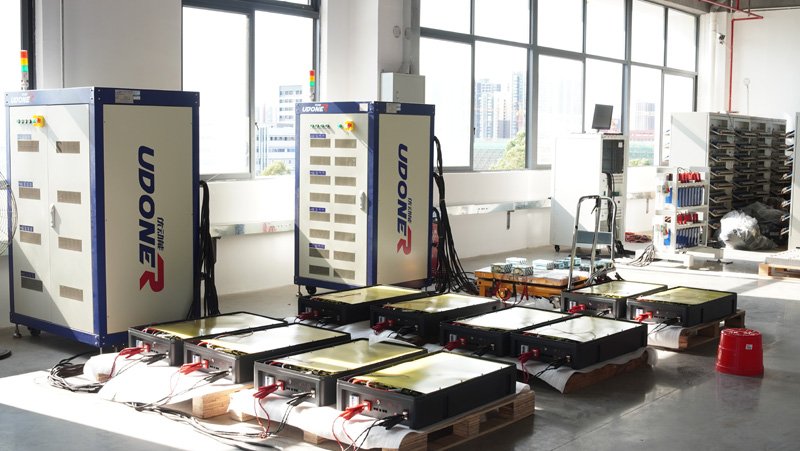
3.2 Long Cycle Life and Durability
LFP batteries tend to last considerably longer than many NMC/NCA counterparts, especially under daily cycling conditions typical of energy storage:
- Frequent full charge/discharge cycles can push LFP batteries to several thousand cycles before notable degradation.
- For daily-cycled grid or home storage, this can translate into 10–15+ years of useful life under appropriate conditions.
This durability lowers:
- Levelized cost of storage (LCOS)
- Maintenance and replacement frequency
- Total ownership cost for both EV fleets and stationary systems
3.3 Cost Advantages and Supply Chain Benefits
LFP has no nickel, no cobalt—two metals that:
- Are expensive and volatile in price
- Come with environmental and social concerns, especially cobalt
Iron and phosphorus are:
- Abundant and widely available
- Lower cost
- Less geopolitically concentrated than cobalt or high-grade nickel
As manufacturing scales and tech improves, LFP cell costs have fallen dramatically and are highly competitive with, and often cheaper than, NMC/NCA on a per-kWh basis—especially for large packs in EVs and grid applications.
3.4 Fast-Charging and High Power Capability
While historically LFP was seen as weaker in cold weather and high-rate charging, newer generations have:
- Improved charging speeds, especially in moderate climates
- Better low-temperature performance with advanced electrolytes and cell designs
- Strong power capability, making them suitable for rapid charge/discharge scenarios in grid services (e.g., frequency regulation)
4. LFP Batteries in Electric Vehicles: Reshaping the EV Landscape
4.1 Why Automakers Are Embracing LFP
Several major automakers have shifted large parts of their lineup to LFP for standard-range or mid-range EVs because:
- Lower cost per kWh → Cheaper EVs, more competitive pricing
- Improved safety → Lower risk of battery fires, fewer complex thermal systems
- Long cycle life → Better warranty economics and residual values
- Good enough range for daily driving and urban use
EVs with LFP packs can often be charged to 100% daily with less degradation compared to many high-nickel chemistries that are typically recommended to stop at ~80–90% for routine use.
4.2 Typical LFP Use Cases in EVs
- Entry-level EVs: Standard-range sedans, hatchbacks, and compact SUVs
- Urban fleets: Taxis, ride-hailing, car sharing
- Commercial vehicles: Delivery vans, light trucks, and buses
- Two-wheelers and micro-mobility: E-bikes, scooters, small urban transport
These are all segments where:
- Daily range needs are modest to moderate
- Predictable, frequent charging is common
- Total cost of ownership (TCO) matters more than absolute range
4.3 Range and Energy Density: Is LFP “Good Enough”?
It’s true that, all else equal, LFP packs store less energy per unit weight than high-nickel NMC/NCA. However, several trends make LFP viable even for many passenger cars:
- Improved pack design: “Cell-to-pack” (CTP) and structural packs reduce overhead, increasing effective pack-level energy density.
- Improved drive efficiency: More efficient motors, inverters, and aerodynamics mean less energy is needed per km.
- Real-world usage: Many drivers rarely use more than 200–300 km per day.
For example, with modern EV efficiency around 13–18 kWh/100 km, an LFP pack of 50–60 kWh can comfortably deliver 300–400+ km of rated range, which is more than sufficient for typical daily driving and even longer trips with charging stops.
4.4 Long-Term Cost of Ownership
For EV buyers and fleet operators, LFP’s long cycle life and robust chemistry:
- Reduce battery-related degradation costs
- Lower warranty risk for manufacturers
- Support higher mileage over the vehicle’s life without needing a battery replacement in many use cases
In fleet applications (delivery vans, taxis, buses), where vehicles rack up large mileage counts and high daily cycling, LFP often provides superior economics over the vehicle lifetime.
5. LFP in Stationary Energy Storage: Home, Commercial, and Grid-Scale
While EVs get the headlines, LFP’s strongest case may actually be in stationary energy storage.
5.1 Why LFP Is Ideal for Stationary Applications
Stationary storage priorities differ from those of mobile applications:
- Weight and volume are less critical (you’re not driving the battery around).
- Safety and long cycle life are crucial, especially when installed in buildings or large plants.
- Lower cost and predictable performance over many years are key.
LFP matches these needs almost perfectly:
- Long lifetime → Great for daily cycling with solar
- High safety → Better suited for residential, commercial, and dense urban installations
- Lower cost → Reduces per-kWh storage cost
5.2 Residential Energy Storage Systems (ESS)
Home battery systems paired with rooftop solar are a major growth area. Residential ESS often use LFP because:
- Homeowners want low fire risk and long warranties (e.g., 10+ years).
- LFP systems handle frequent charge/discharge cycles (daily solar use).
- Many households prefer being able to charge to 100% regularly without worrying about accelerated degradation.
5.3 Commercial and Industrial Storage
Businesses use batteries for:
- Peak shaving and demand charge management
- Backup power
- Solar self-consumption
For these use cases:
- LFP’s longer cycle life reduces long-term costs.
- High safety is critical for installations in or near buildings.
- Total cost and reliability matter more than ultra-high energy density.
5.4 Grid-Scale Storage
At grid scale, LFP has become the dominant lithium-ion chemistry in many new solar-plus-storage and standalone storage projects because:
- It offers a favorable LCOS (Levelized Cost of Storage).
- It provides fast response for grid balancing, frequency regulation, and peak shaving.
- Utilities and independent power producers (IPPs) value safety, stability, and predictable aging.
6. Technical Comparison: LFP vs NMC/NCA in Real-World Metrics
To put things in perspective, here’s a simplified table summarizing advantages and disadvantages:
Table: Pros and Cons of LFP vs NMC/NCA for Different Use Cases
| Use Case | LFP – Main Advantages | LFP – Main Disadvantages | NMC/NCA – Main Advantages | NMC/NCA – Main Disadvantages |
|---|---|---|---|---|
| EV – Standard Range | Low cost, safe, long cycle life | Lower energy density → heavier pack | Higher energy density → longer range | Higher cost, more sensitive to degradation |
| EV – Long Range / Premium | Improved safety, good durability | Limited max range vs similar pack size | Highest range in same pack volume/weight | More complex thermal management, costlier |
| Residential Storage | Excellent safety, long life, 100% daily SOC OK | Slightly larger battery for same capacity | Compact form factor for small spaces | Higher cost, potentially shorter cycle life |
| Commercial / Industrial ESS | Great LCOS, high safety, robust cycling | Slightly larger footprint | High energy density (if space is critical) | Higher cost, more sensitive to overuse |
| Grid-Scale Storage | Lowest LCOS, safety, proven for large systems | Energy density less critical but lower | Higher energy density per container | More complex management, safety considerations |
7. Economics: Cost Trends and Levelized Cost of Storage (LCOS)
7.1 Cost per kWh
Battery prices have been falling for years. On average (historically), real-world data from organizations like BloombergNEF show that:
- Lithium-ion battery pack prices dropped dramatically from 2010 to early 2020s.
- Within lithium-ion, LFP has become one of the lowest-cost chemistries at pack level due to materials and scale.
At a high level:
- LFP is often favored for applications where lowest cost per kWh is critical (home storage, grid storage, entry-level EVs).
- NMC/NCA remains competitive where high energy density justifies the cost premium (luxury EVs, high-performance EVs).
7.2 Levelized Cost of Storage (LCOS)
LCOS is the key metric for long-term projects. It includes:
- Capex (initial investment)
- Opex (operation & maintenance)
- Replacement costs
- Lifetime energy throughput
LFP’s lower capex per kWh, combined with longer cycle life, tends to yield:
- Lower LCOS than many competing chemistries in heavily cycled applications.
- Particularly strong economics for daily-cycled solar-plus-storage systems.
8. Environmental and Supply Chain Considerations
8.1 Reduced Reliance on Scarce Materials
LFP batteries use:
- Iron, phosphorus, lithium—all relatively abundant compared to cobalt and high-grade nickel.
- No cobalt, helping to reduce reliance on mining regions associated with human rights and environmental issues.
This:
- Helps reduce some ESG (Environmental, Social, Governance) risks.
- Supports more sustainable and scalable supply chains, especially as battery demand grows rapidly.
8.2 Environmental Footprint
The overall environmental footprint of LFP vs other chemistries is influenced by:
- Mining and processing of raw materials
- Manufacturing processes
- Lifetime energy throughput
Generally:
- Less reliance on cobalt and nickel reduces some environmental impacts and social risks.
- Long cycle life means more energy delivered per unit of production footprint, improving lifetime sustainability.
However, no chemistry is impact-free. Recycling and responsible sourcing remain critical.
8.3 Recycling and End-of-Life
As LFP deployment scales, recycling becomes a key topic:
- LFP contains iron and phosphorus, which have lower economic value than cobalt but are still recyclable.
- The economic incentive to recycle might be lower than for cobalt-rich chemistries, but regulatory and environmental drivers will push recycling infrastructure to mature.
- Advances in recycling technologies (direct recycling, hydrometallurgical processes) can recover lithium and other materials, reducing long-term resource pressure.
9. Technical Limitations of LFP and How They’re Being Addressed
LFP isn’t perfect. Its limitations are real—but they’re being actively mitigated by R&D and system design.
9.1 Lower Energy Density
- Historically, this has limited LFP for high-performance EVs and applications where weight/volume are critical.
Mitigation strategies:
- Cell-to-Pack (CTP) and cell-to-chassis designs reduce inactive materials (modules, structures).
- Better materials and manufacturing: Higher-density LFP cathodes, improved anodes, more efficient use of space.
- Application targeting: Using LFP where size/weight are less critical (grid storage, standard-range EVs) and higher-energy chemistries where needed.
9.2 Cold-Weather Performance
LFP cells have traditionally had slower charge acceptance and reduced power in low temperatures.
Mitigation strategies:
- Improved electrolyte formulations designed for low-temperature stability.
- Integrated battery heating and advanced thermal management in EVs.
- Charging protocols tailored to colder environments.
9.3 Voltage and BMS Requirements
LFP has a nominal cell voltage of ~3.2–3.3 V vs ~3.6–3.7 V for NMC/NCA:
- Requires different pack designs and Battery Management Systems (BMS).
- Slightly different voltage windows and SOC estimation.
However, this is mainly an engineering detail, handled by modern power electronics and control systems.
10. The Role of LFP in the Broader Energy Storage Ecosystem
LFP is not the only chemistry of the future; rather, it plays a critical role in a portfolio of solutions.
10.1 LFP vs Other Emerging Technologies
Beyond NMC/NCA, future storage might include:
- Solid-state batteries
- Sodium-ion batteries
- Flow batteries
- Hydrogen-based storage
LFP’s position:
- Solid-state promises higher energy density and safety, but mass-market commercial deployment is still emerging.
- Sodium-ion might compete with LFP on cost and safety, especially for stationary storage, but is still maturing.
- Flow batteries are attractive for very long-duration storage (>4–8 hours), but their complexity and cost profiles differ.
In the near to mid term, LFP is:
- Mature, proven, and well-understood.
- Already deployed at scale.
- Economically compelling across multiple sectors.
10.2 Hybrid Solutions
In many future systems, we can expect hybrid storage solutions:
- EV makers offering both LFP and NMC packs depending on model and market.
- Grid-scale systems combining LFP batteries for fast response with other technologies (e.g., pumped hydro, flow batteries) for very long-duration storage.
- Residential and commercial systems combining LFP batteries with smart energy management, demand response, and flexible tariffs.
11. Real-World Applications and Case Types
Rather than focusing on brand names, consider these typical scenarios where LFP is already a common choice:
11.1 Residential Solar-Plus-Storage
- A homeowner installs a rooftop PV system and a 10–20 kWh LFP battery.
- The system charges during the day, powers the home in the evening, and provides backup in outages.
- LFP’s long cycle life and safety allow daily cycling with high SOC without excessive degradation.
11.2 Commercial Demand Charge Management
- A factory or data center uses LFP battery storage to reduce demand charges from short, high peaks in consumption.
- The battery charges off-peak or from on-site renewables.
- LFP’s quick response and long cycle life are ideal for frequent high-power cycling.
11.3 Utility-Scale Solar Farm with Storage
- A large solar plant uses LFP-based ESS to shift solar generation into evening peak hours.
- Storage duration might be 2–4 hours per day, with daily cycling.
- LFP’s safety, cost, and predictable aging make it one of the most common choices.
11.4 Urban Electric Bus Fleet
- City buses use LFP packs that are charged overnight and opportunistically during the day.
- LFP’s safety profile is important in densely populated urban depots and streets.
- The long cycle life supports intense daily use with many charge cycles per year.
12. Design and Implementation Considerations for LFP Systems
If you’re evaluating or designing LFP-based systems, consider the following technical aspects.
12.1 Battery Management System (BMS)
A robust BMS is critical to:
- Monitor cell voltages, temperatures, and currents
- Prevent overcharge/over-discharge
- Manage balancing among cells
- Implement thermal management strategies
LFP’s flat voltage curve over much of its SOC range can make SOC estimation more challenging; advanced BMS algorithms and accurate calibration are essential.
12.2 Thermal Management
Even though LFP is more thermally stable:
- Proper cooling is still required for high-power or high-energy applications.
- Both active cooling (liquid, forced air) and passive solutions can be used depending on scale and duty cycle.
- Maintaining cells within optimal temperature ranges improves lifetime.
12.3 System Integration
For stationary systems:
- Consider containerized solutions for large ESS.
- Ensure proper fire suppression and ventilation, even with LFP.
- Integrate with inverters, protection devices, and control systems compliant with local grid codes.
For EVs:
- Structural integration of packs into the vehicle chassis can lower cost and weight.
- Crash safety, thermal isolation, and sealing against environmental exposure are key.
13. Future Outlook: Why LFP Will Likely Dominate Key Segments
Multiple converging trends suggest that LFP will continue to grab a growing share of the energy storage market.
13.1 Continued Cost Reduction
As LFP manufacturing scales further:
- Economies of scale and process innovations will likely push costs down.
- Cathode manufacturing and pack assembly will become more efficient.
- High-volume production for EVs and grid storage reinforces a virtuous cycle of cost reduction.
13.2 Widening Application Scope
Improvements in performance and energy density will expand LFP’s suitability:
- Better low-temperature behavior and fast-charging capability.
- Higher energy density cells narrowing the gap with older-generation NMC.
- New packaging concepts (CTP, structural packs) multiplying pack-level energy density.
13.3 Regulatory and Safety Drivers
Safety regulations and urban planning will continue to:
- Favor chemistries with better thermal stability.
- Require strict standards for ESS installations in buildings and urban zones.
- Promote systems that minimize fire and explosion risk.
LFP’s inherent safety characteristics align well with these evolving requirements.
13.4 Coexistence with Other Technologies
LFP is unlikely to eliminate other chemistries, but it will:
- Dominate cost-sensitive, safety-critical, and high-cycle applications.
- Coexist with high-nickel and future solid-state chemistries in premium/performance segments.
- Complement non-lithium technologies (e.g., flow batteries, sodium-ion) in niche or long-duration use cases.
14. Summary: Why Lithium Iron Phosphate Batteries Are the Future of Energy Storage
Putting it all together:
- Safety: LFP offers superior thermal stability and lower fire risk, crucial for EVs, homes, and grid-scale systems.
- Longevity: High cycle life and durability make LFP ideal for daily-cycled storage and commercial applications.
- Cost and LCOS: Lower material costs and long life reduce both upfront and lifetime costs.
- Sustainability and Supply Chain: No cobalt, less reliance on nickel, and more abundant materials enable more scalable and less problematic supply chains.
- Rapid Adoption: Automakers, residential storage providers, and utility-scale developers are already implementing LFP at large scale.
- Technological Momentum: Ongoing improvements in design, manufacturing, and integration are steadily improving the performance and economics of LFP systems.
Given these factors, Lithium Iron Phosphate batteries are poised to be a cornerstone of the global energy storage landscape—especially in EV segments where “good enough range” is sufficient, and in stationary storage where safety, cost, and long life are paramount.
15. Advanced FAQ: LFP Batteries and the Future of Energy Storage
Q1. Are LFP batteries safe to install inside homes and buildings?
LFP batteries are among the safest lithium-ion chemistries available, thanks to:
- High thermal stability
- Lower risk of thermal runaway and fire
However:
- They must still be installed as part of a certified system that meets local electrical and fire codes.
- Proper ventilation, fire protection, and professional installation are essential.
Always follow manufacturer guidelines and use certified installers.
Q2. How does the lifespan of an LFP battery compare to NMC in real use?
In many daily-cycled scenarios (e.g., solar-plus-storage, EVs used for commuting):
- LFP can reach 2,000–6,000+ cycles to ~80% capacity, depending on quality and conditions.
- NMC often delivers 1,000–2,000+ cycles under similar conditions.
Actual life depends on:
- Depth of discharge
- Temperature management
- Charging speed and patterns
For high-cycle applications, LFP often delivers longer usable life and lower LCOS.
Q3. Are LFP batteries affected more by cold weather than other lithium-ion chemistries?
LFP cells historically show:
- Reduced charge acceptance and power at low temperatures compared to moderate climates.
- This is a challenge shared with many lithium-ion chemistries, though LFP can be more sensitive in some designs.
Modern solutions:
- Battery heating systems in EVs
- Improved electrolytes and cell designs
- Smart charging strategies in cold climates
If you live in a very cold region, choose systems with validated low-temperature performance and appropriate thermal management.
Q4. Can LFP batteries be charged to 100% regularly?
One major advantage of LFP is that they tolerate frequent 100% charging better than many high-nickel chemistries:
- Many EVs with LFP packs are designed for routine 100% SOC for daily use.
- This is particularly useful for maximizing available range in standard-range EVs and storage systems.
Even so:
- Always follow manufacturer recommendations.
- Avoid excessive heat and extremely high charge rates at full SOC.
Q5. Is LFP the best choice for all EVs?
Not necessarily. LFP is excellent for:
- Standard-range and urban EVs
- Fleets with predictable routes and frequent charging
- Markets where cost and safety are paramount
High-nickel NMC/NCA (or future solid-state chemistries) may still be preferable for:
- Long-range and premium EVs needing maximum energy density
- Performance vehicles where weight and range are critical
In practice, many manufacturers offer both LFP and high-nickel options depending on model and market.
Q6. How should I evaluate whether LFP is right for my home or business storage project?
Consider:
- Cycling profile: Daily solar cycling? LFP is a strong fit.
- Safety requirements: Indoor or densely populated installations favor safer chemistries.
- Budget and LCOS: Compare total cost of ownership, not just upfront price.
- Available products: Look for reputable brands with LFP-based ESS certified in your region.
For most solar-plus-storage and commercial demand management projects, LFP is often the default choice today.
Q7. What is the future outlook for LFP vs sodium-ion and solid-state batteries?
- Sodium-ion: Promising for low-cost, lower-voltage applications; may complement or compete with LFP in stationary storage and low-cost EVs, but is still emerging.
- Solid-state: Aiming for higher energy density and safety; likely to appear first in premium or specialized applications due to cost and complexity.
In the near to mid term:
- LFP is a mature, proven, and rapidly scaling technology.
- Sodium-ion and solid-state will likely coexist and gradually take market share in specific niches, but LFP will remain central to mainstream energy storage for many years.
Q8. How can I ensure I’m using up-to-date data when comparing battery options?
Since battery technology evolves rapidly:
- Always check recent manufacturer datasheets for specific models.
- Refer to current industry reports (e.g., from IEA, BloombergNEF, major research institutes).
- Look for independent test results from labs and large-scale deployments.
This will allow you to refine the broad trends and comparisons in this article with the latest measured values.
Next step if you’re planning a project:
Tell me your specific use case (EV type, residential solar system size, commercial facility load profile, etc.), and I can help outline an LFP-based solution architecture and key specs to look for when evaluating real products.