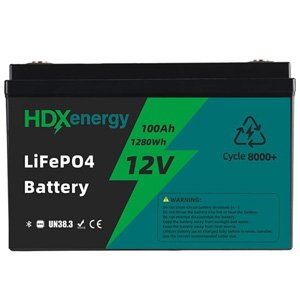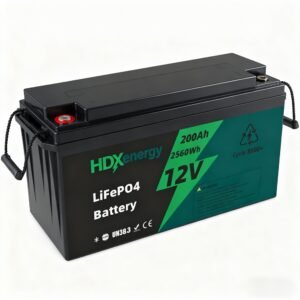
The global transition toward renewable energy has placed Lithium Iron Phosphate (LiFePO4) batteries at the forefront of the revolution. Whether you are powering an off-grid solar system, an electric vehicle (EV), or a marine vessel, understanding how to care for these “blue blocks” is the difference between a battery that lasts 3 years and one that lasts 15 years.
In this exhaustive guide, we will move beyond basic advice and dive into the electrochemical nuances of LiFePO4 maintenance, backed by real-time data and industry standards.
1. Why LiFePO4 is the Gold Standard for Longevity
Before we discuss maintenance, we must understand the “why.” Unlike traditional Nickel Manganese Cobalt (NMC) or Lead-Acid batteries, LiFePO4 cells utilize an olivine-type structure. This chemical arrangement is physically more stable during charge and discharge cycles, making it less prone to thermal runaway.
Comparison of Battery Chemistries (Real-Time Data 2024)
| Feature | LiFePO4 (LFP) | Lithium NMC | Lead-Acid (AGM/GEL) |
|---|---|---|---|
| Cycle Life (80% DoD) | 3,000 – 7,000+ | 500 – 1,500 | 300 – 500 |
| Safety Profile | Extremely High | Moderate | High (but off-gasses) |
| Operating Temp Range | -20°C to 70°C | -20°C to 60°C | -15°C to 45°C |
| Energy Density | Moderate | High | Very Low |
| Cost per Cycle | ~0.05−0.08 | ~0.15−0.25 | ~0.20−0.40 |
2. The Golden Rule of Depth of Discharge (DoD)
One of the most common myths is that you should “cycle” a battery fully to “keep it healthy.” In the world of LiFePO4, the opposite is true.
Understanding the 80/20 Rule
While LiFePO4 batteries are marketed as having “100% usable capacity,” discharging them to 0% repeatedly places immense stress on the copper current collectors and the electrolyte.
Pro Tip: To maximize lifespan, aim for an 80% Depth of Discharge. This means keeping your battery between 10% and 90% State of Charge (SoC).
- Data Insight: Research indicates that a cell cycled at 100% DoD may last 3,000 cycles, but the same cell cycled at 80% DoD can often exceed 6,000 cycles.
3. Precision Charging: Voltages and Amperage
Charging is where most LiFePO4 batteries meet an early grave. Unlike lead-acid, LFP batteries do not like “float” charging at high voltages for extended periods.
Recommended Charging Parameters for 12V Systems
To extend life, your charger settings should be precise.
| Phase | Recommended Voltage (12V System) | Notes |
|---|---|---|
| Bulk/Absorption | 14.2V – 14.4V | Avoid 14.6V for daily use. |
| Float | 13.5V – 13.6V | Higher float voltages “cook” the cells. |
| Low Voltage Cutoff | 11.5V – 12.0V | Protects against permanent cell damage. |
| Equalization | DISABLED | Never equalize LiFePO4; it will destroy them. |
The Impact of C-Rate
The “C-Rate” refers to how fast you charge or discharge. A 100Ah battery charged at 50A is being charged at 0.5C.
- Maintenance Tip: For maximum longevity, keep your charge and discharge rates below 0.5C. While many LFP batteries can handle 1C or higher, the heat generated degrades the internal SEI (Solid Electrolyte Interphase) layer faster.
4. Temperature Management: The Silent Killer
LiFePO4 batteries are rugged, but they have a “Kryptonite”: Charging in freezing temperatures.
Cold Weather Risks
If you charge a LiFePO4 cell below 0°C (32°F), a phenomenon called Lithium Plating occurs. Instead of the lithium ions moving into the anode, they coat the surface of the anode in metallic form. This creates internal short circuits and can cause the battery to fail or become unstable.
- Solution: Use batteries with integrated heating pads or ensure your BMS (Battery Management System) has a low-temperature charge disconnect.
- Storage Tip: It is perfectly safe to discharge or store LFP in the cold; just do not charge them.
High-Temperature Degradation
Operating consistently above 45°C (113°F) accelerates the breakdown of the electrolyte. For every 10°C increase in average operating temperature, the battery’s lifespan is roughly halved.
5. The Critical Role of the BMS (Battery Management System)
A LiFePO4 battery is only as good as its BMS. This is the “brain” that prevents:
- Over-voltage: Stopping the charge when a cell hits 3.65V.
- Under-voltage: Stopping the discharge when a cell hits 2.5V.
- Short-circuits: Instantaneous shutoff during a fault.
- Cell Balancing: Ensuring all cells inside the pack have the same voltage.
Maintenance Action: Periodically check your BMS Bluetooth app (if available) to ensure cell voltages are “balanced” (within 0.05V of each other). If they are out of sync, a full top-charge to 14.4V and a long “absorption” period may be required to let the passive balancers work.
6. Long-Term Storage Best Practices
If you are putting your RV or boat away for the winter, do not leave your LiFePO4 batteries at 100% or 0%.
- Ideal Storage SoC: 40% to 60%.
- Voltage: For a 12V battery, this is approximately 13.1V – 13.2V.
- Self-Discharge: LFP has a very low self-discharge rate (approx. 2-3% per month). However, “phantom loads” (clocks, sensors) can drain them.
- Action: Physically disconnect the terminals or use a high-quality battery isolator switch.
7. Real-World Maintenance Checklist
To reach the 10-year mark, follow this structured routine:
- Visual Inspection: Check for bulging, terminal corrosion, or loose connections.
- SOC Verification: Ensure the battery hasn’t been sitting at 0% or 100% for weeks.
Monthly Tasks
Quarterly Tasks
- Full Cycle (Optional): Once every 3-6 months, discharge to 10% and charge to 100% to “re-calibrate” the BMS State of Charge meter.
- Terminal Cleaning: Use a wire brush and anti-corrosion spray if used in marine environments.
8. Professional Q&A
Q1: Can I use a standard Lead-Acid charger for my LiFePO4 battery?
- A: It is not recommended. While some AGM chargers work, many have an “equalization mode” (high voltage desulfation) that will trigger the BMS to shut down or damage the LFP cells. Always use a charger with a dedicated Lithium profile.
Q2: Is it normal for my LiFePO4 battery to stay at 13.3V for a long time?
- A: Yes. LiFePO4 has an extremely flat discharge curve. Unlike lead-acid, which drops voltage linearly, LFP stays between 13.0V and 13.3V for about 80% of its capacity. Voltage is a poor indicator of SoC for lithium.
Q3: How many years will a LiFePO4 battery really last?
- A: In a typical solar setup with one cycle per day and proper temperature control, you can expect 10 to 15 years of service before the battery drops to 80% of its original capacity.
Q4: Should I buy “Grade A” cells?
- A: Absolutely. Grade A cells are tested for capacity and internal resistance consistency. Grade B cells (often found on discount sites) may have higher self-discharge rates and shorter lifespans due to chemical impurities.
Summary of Key Points
- Don’t overcharge: Stick to 14.4V max for 12V systems.
- Avoid 0%: Keep your Depth of Discharge around 80%.
- Watch the Cold: Never charge below freezing (0°C).
- BMS is King: Use a high-quality BMS to protect your investment.
- Storage: Store at 50% SoC in a cool, dry place.