1. Introduction
Across Asia and Africa, microgrids have shifted from experimental pilots to practical, bankable infrastructure. They are:
- Bringing first‑time electricity access to remote communities
- Cutting diesel consumption and reducing energy costs
- Improving resilience against climate‑induced disruptions
- Enabling local economic development and digital inclusion
From solar‑battery microgrids in East Africa to hybrid renewable systems on remote islands in Southeast Asia, microgrid success stories are reshaping how emerging markets think about power infrastructure.
This article explores:
- Why microgrids are particularly impactful in Asia and Africa
- Landmark microgrid projects and their outcomes
- Technology and business model patterns across successful deployments
- Lessons learned for policymakers, developers, and investors
The focus is on real‑world patterns and representative examples rather than an exhaustive list of every project.
2. Why Microgrids Matter in Asia and Africa
2.1 Energy Access Gap
According to recent global energy access tracking (up to around 2023):
- Hundreds of millions of people still lack access to electricity, predominantly in Sub‑Saharan Africa and parts of South and Southeast Asia.
- Many more experience unreliable supply, frequent outages, or dependence on expensive diesel.
Microgrids offer a powerful alternative to waiting for traditional grid expansion:
- Faster to deploy
- Scalable and modular
- Tailored to local conditions and demand profiles
2.2 Diesel Dependence and Cost Volatility
In remote areas:
- Diesel generators have historically been the default power source.
- Fuel must often be transported by truck, boat, or even air, raising costs dramatically.
- Price volatility for fuel directly impacts the affordability of electricity.
Solar PV + battery microgrids significantly reduce diesel consumption, providing:
- Lower levelized cost of electricity (LCOE) in many cases
- Greater predictability in operating costs
- Reduced exposure to fuel supply disruptions
2.3 Climate and Resilience
Many parts of Asia and Africa are highly vulnerable to:
- Tropical storms and cyclones
- Floods and droughts
- Heatwaves and shifting weather patterns
Microgrids with local renewable generation and storage can:
- Maintain critical loads during grid outages
- Reduce damage from voltage and frequency instability
- Support climate adaptation strategies for communities and key institutions
3. Microgrid Success Patterns: What Works in Asia and Africa
Before diving into specific stories, it helps to extract common patterns:
3.1 Technology Patterns
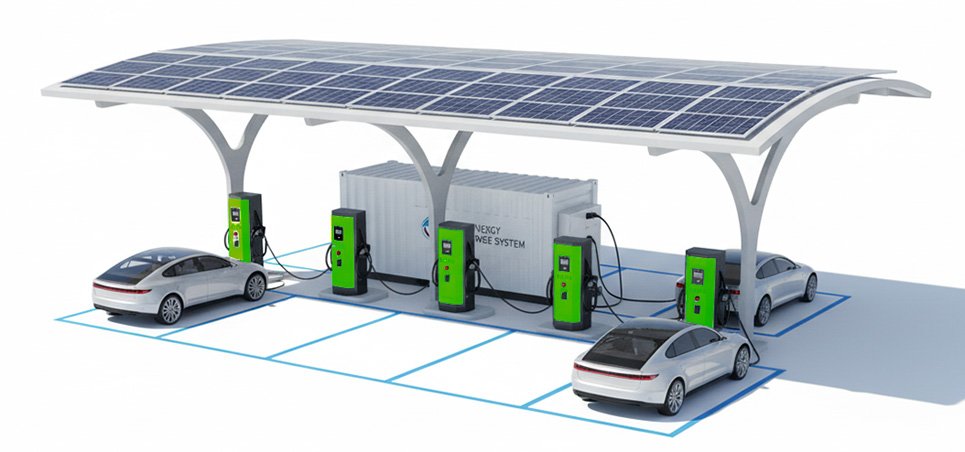
- Dominant architecture: Solar PV + battery + diesel/genset backup
- Growing use of lithium‑ion batteries, especially LFP chemistries
- Increasing integration of smart meters and remote monitoring
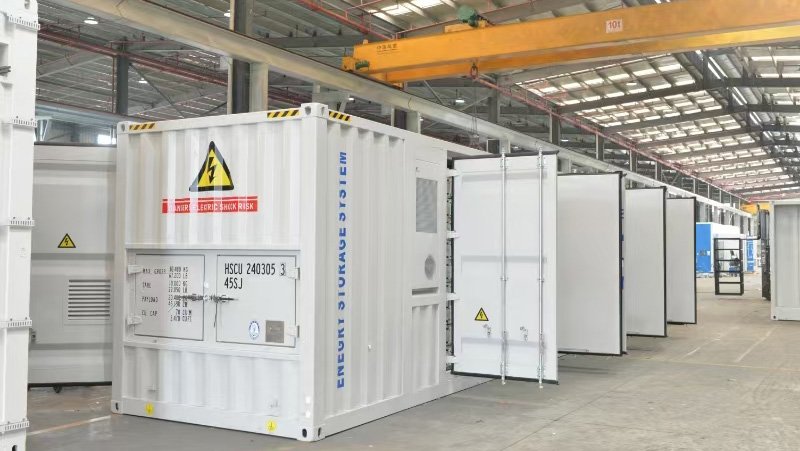
- Use of pre‑fabricated, modular containers for quicker deployment and easy replication
3.2 Business Models
- Pay‑As‑You‑Go (PAYG) and prepaid models for low‑income households
- Mini‑utility concessions and regulated mini‑grid tariffs in some countries
- Public‑private partnerships (PPPs) for community microgrids
- Donor‑supported or blended finance for early‑stage and high‑impact projects
3.3 Social and Economic Impact
Successful microgrids often:
- Enable productive uses of energy: irrigation, milling, cold storage, small manufacturing
- Support education (lighting for schools, internet access)
- Improve health outcomes (refrigeration for vaccines, powered clinics)
- Reduce reliance on kerosene and charcoal, improving indoor air quality
4. Regional Overview: Microgrid Momentum in Asia and Africa
4.1 Asia
Key drivers in Asia:
- Remote islands and archipelagos (Southeast Asia, Pacific)
- Rural electrification in South Asia (India, Bangladesh, Nepal)
- Industrial and commercial microgrids in more advanced economies (Japan, South Korea)
- Post‑disaster resilience projects (particularly in Japan and the Philippines)
4.2 Africa
Key drivers in Africa:
- Large rural electrification gaps in Sub‑Saharan Africa
- National programs supporting mini‑grids (e.g., in Nigeria, Kenya, Tanzania)
- Strong presence of impact investors and development finance institutions
- Mobile money ecosystems supporting PAYG models in East Africa
5. Comparative Snapshot: Asia vs Africa Microgrid Context
Table 1 – Microgrid Context in Asia vs Africa (High‑Level)
| Aspect | Asia | Africa |
|---|---|---|
| Main drivers | Rural access, islands, resilience, C&I demand | Rural access, diesel cost, donor programs |
| Common architectures | PV + BESS + diesel; hybrid island systems | PV + BESS + diesel; containerized mini‑grids |
| Financial models | PPPs, utility pilots, private mini‑grid devs | PAYG, mini‑grid concessions, donor funding |
| Policy maturity (varies) | Some advanced regulations (e.g., India, Japan) | Emerging but improving (e.g., Nigeria, Kenya) |
| Key segments | Villages, islands, campuses, industrial parks | Villages, trading centers, farms, clinics |
6. Success Stories in Asia
6.1 India: Village and C&I Microgrids
6.1.1 Rural Village Microgrids
India has seen numerous solar mini‑grid and microgrid pilots and commercial deployments in:
- Uttar Pradesh
- Bihar
- Jharkhand
- Other states with low rural electrification historically
Common features:
- Solar PV capacity ranging from tens of kW to several hundred kW
- Battery storage for evening and night supply
- Tariff structures designed to be affordable yet sustainable
- Focus on productive loads like irrigation pumps, micro‑enterprises, and cold storage
Outcomes reported by project developers and NGOs:
- Extended business hours for shops and services
- Improved education outcomes due to reliable lighting
- Reduced diesel consumption and kerosene use
6.1.2 C&I Microgrids in Industrial Clusters
In industrial hubs:
- Microgrids are used to stabilize power and reduce outages that disrupt production.
- Solar + battery microgrids complement the grid and onsite gensets.
- Energy‑as‑a‑Service providers structure projects with no or low upfront CAPEX for industrial clients.
6.2 Bangladesh: Solar Microgrids Beyond SHS
Bangladesh is known for large‑scale deployment of solar home systems (SHS), but there is also:
- A growing network of solar‑battery microgrids serving clusters of customers
- Support from national agencies and development partners
- Integration with productive loads (e.g., rice mills, fishing communities)
These microgrids help:
- Provide more robust power than standalone SHS
- Enable higher‑powered productive equipment
- Support local micro‑business ecosystems
6.3 Southeast Asia: Island and Tourist Area Microgrids
In Southeast Asian archipelagos (e.g., Indonesia, Philippines):
- Thousands of islands are difficult to connect via traditional grid infrastructure.
- Many relied solely on diesel, resulting in:
- High fuel costs
- Limited service hours
- Noise and pollution
Hybrid microgrids—PV + BESS + diesel—have:
- Increased service hours (often 24/7 vs limited evening power)
- Reduced fuel use by significant percentages
- Improved power quality and reliability for households, schools, and tourist facilities
These projects serve as replicable templates for other islands and remote coastal communities.
6.4 Japan: Resilience‑Focused Microgrids
Post‑Fukushima and with frequent natural disasters, Japan has:
- Implemented microgrids in university campuses, public facilities, and municipalities
- Emphasized the ability to island during disasters and maintain critical services
- Leveraged advanced control systems and integration with national grid standards
Outcomes include:
- Improved resilience for hospitals and disaster shelters
- Valuable operational experience for utilities and technology providers
7. Success Stories in Africa
7.1 East Africa: PAYG Solar Mini‑Grids
7.1.1 Kenya and Tanzania
Kenya, Tanzania, and neighboring countries have been fertile ground for private mini‑grid developers due to:
- Established mobile money ecosystems (e.g., M‑Pesa)
- Entrepreneurial local developers and international partners
- Supportive donor programs and policy pilots
Typical project characteristics:
- PV capacity: from 10 kWp to several hundred kWp per site
- BESS sized to support 4–8 hours (or more) of supply post‑sunset
- Smart metering and PAYG tariffs paid by mobile money
- Load segmentation:
- Households
- Small shops
- Water pumps
- Telecom towers in some cases
Measured impacts reported by various program evaluations:
- Significant decrease in household spending on kerosene and phone charging
- New or expanded businesses (barbershops, welding shops, cold drinks, internet cafés)
- Improved quality of life and health outcomes
7.2 West Africa: Utility and Concession Models
Countries like Nigeria and others in West Africa:
- Have launched or are developing mini‑grid regulations and licensing frameworks
- Are supporting microgrids as:
- Standalone systems in underserved communities
- Future nodes of a “grid of grids” concept
These success stories:
- Demonstrate that properly designed tariffs and regulation can attract private capital
- Show that standardized designs and procurement reduce cost and complexity
7.3 Southern Africa: Mining & Industrial Microgrids
In resource‑rich regions:
- Mining companies and industrial players in Southern Africa have implemented microgrids to:
- Reduce diesel and heavy fuel oil consumption
- Decrease exposure to grid instability
- Improve ESG performance and meet decarbonization targets
Hybrid microgrids combining PV + BESS + existing gensets:
- Lower operational costs
- Provide more stable power for critical industrial processes
- Support corporate sustainability reporting
8. Technology Mix in Asian and African Microgrids
Table 2 – Typical Technology Mix by Context
| Context | Generation Mix | Storage | Control & Metering |
|---|---|---|---|
| Rural village (Asia) | PV + small diesel backup | Li‑ion BESS | Smart meters, simple EMS |
| Remote island (Asia) | PV + diesel + (sometimes wind/CHP) | Li‑ion BESS | Advanced EMS with islanding capability |
| C&I facility (Asia) | PV on rooftops + grid + gensets | Li‑ion BESS | Microgrid controller, EMS, SCADA |
| Rural mini‑grid (Africa) | PV + diesel backup | Li‑ion BESS | Smart meters, PAYG, remote monitoring |
| Mining site (Africa) | PV + diesel/HFO gensets, sometimes wind | Li‑ion BESS | EMS integrating industrial loads |
9. Measured Benefits from Successful Microgrids
9.1 Quantitative Benefits (Typical Ranges)
Reported outcomes from field studies and project evaluations often include:
- Diesel reduction: 30–70% or more, depending on design and solar resource
- LCOE reduction vs diesel‑only: substantial in many remote locations
- Reliability: hours of supply per day increasing from a few hours to 24/7
9.2 Qualitative Benefits
- Reduced noise and air pollution
- Improved safety and reduced fire risk (less kerosene)
- Enhanced education and healthcare services
- Stronger local economies via new businesses and jobs
Table 3 – Example Impact Categories for Village‑Scale Microgrids
| Impact Area | Pre‑Microgrid Situation | Post‑Microgrid Outcomes (Typical) |
|---|---|---|
| Lighting | Kerosene lamps, candles, sporadic grid | Reliable electric lighting (often 24/7) |
| Communication | Limited phone charging, long trips to towns | Local phone charging, sometimes internet access |
| Health | Indoor air pollution from kerosene, no cold chain | Reduced indoor air pollution, vaccine refrigeration |
| Education | Limited evening study hours | Extended study time, device charging at school |
| Income | Limited small business opportunities | New enterprises (shops, milling, welding, ICT) |
10. Business and Financing Models That Succeed
10.1 Pay‑As‑You‑Go (PAYG) and Smart Tariffs
In many African and some Asian projects, PAYG models:
- Allow customers to pay in small, flexible amounts via mobile money
- Match irregular income patterns of rural households
- Reduce default risk for operators by aligning usage and payments
Smart meters enable:
- Accurate measurement and remote disconnection/reconnection
- Time‑based tariffs, block tariffs, or tiered pricing schemes
10.2 Concession and Aggregation Models
Some countries pilot concession models:
- Developers receive rights to serve specific regions or clusters
- Long‑term visibility on customer base helps secure financing
- Standardized tariff methodologies provide more certainty
Aggregation of multiple sites into a single investment portfolio:
- Reduces risk concentration
- Allows institutional investors and DFIs to commit capital at scale
10.3 Public‑Private Partnerships and Donor Support
Early projects often rely on:
- Grants or concessional finance for part of CAPEX
- Technical assistance for feasibility studies and regulatory design
- Capacity building for local utilities and regulators
Over time, as regulatory frameworks and track records improve, commercial financing becomes more feasible.
11. Lessons Learned from Successful Microgrids
11.1 Community Engagement Is Critical
Projects with strong local engagement:
- Involve communities from the planning stage
- Build trust and payment discipline
- Align system size and tariff structure with local affordability and aspirations
11.2 Focus on Productive Use of Energy
Microgrids that actively promote productive loads:
- Have higher and more stable revenues
- Create a virtuous cycle of economic development and energy demand
- Justify more robust and scalable systems
Examples of productive uses:
- Agro‑processing (milling, oil extraction)
- Refrigeration (fish, meat, dairy)
- Workshops (welding, carpentry, metalwork)
- ICT services (printing, internet cafés)
11.3 Standardization and Replicability
Standardized:
- System designs
- Procurement processes
- Contracts and legal frameworks
lead to lower costs and faster replication, turning one‑off success stories into scalable programs.
11.4 Data, Monitoring, and Remote O&M
- Remote monitoring platforms help detect issues early and optimize operation.
- Data from smart meters supports tariff adjustments and future system sizing.
- Remote troubleshooting reduces O&M costs and downtime.
12. Challenges and Barriers Still Faced
Even successful microgrids operate within constraints:
12.1 Regulatory Uncertainty
In some countries:
- Licensing processes are unclear for mini‑grids and microgrids.
- Future grid extension raises questions about compensation and integration.
- Tariff regulation can be uncertain or politically sensitive.
12.2 Affordability and Demand Risk
- Rural populations may have limited ability to pay high tariffs.
- Initial demand can be low; taking time to reach levels that justify the investment.
- Demand growth is uncertain, especially in areas with slow economic development.
12.3 Financing Complexity
- Small, distributed projects can be hard to finance with traditional project finance tools.
- Per‑project transaction costs can be high.
- Currency risk is a concern where revenue is in local currency and capital is in foreign currency.
13. Future Outlook for Microgrids in Asia and Africa
13.1 Scaling from Pilots to Programs
Trends point toward:
- Larger national and regional programs bundling dozens or hundreds of microgrids
- Integration with national electrification strategies and utility planning
- More formal roles for mini‑grids as part of future main grid architecture
13.2 Integration with National Grids and “Grid of Grids” Concepts
As grids expand:
- Some microgrids will be interconnected and transition from islanded mini‑grids to grid‑connected local systems.
- Well‑designed interconnection rules can:
- Preserve investment value for developers
- Enhance grid flexibility and resilience
- Allow microgrids to export surplus power or provide services
13.3 Role in Climate Finance and Just Energy Transition
Microgrids are increasingly recognized within:
- Just energy transition frameworks
- Climate finance, resilience, and adaptation funds
- Country‑level commitments to renewable energy and energy access
They sit at the intersection of:
- Climate mitigation (reduced emissions)
- Adaptation (resilient local infrastructure)
- Development (energy access, jobs, health, education)
14. SEO‑Optimized Summary
Microgrid success stories in Asia and Africa demonstrate that decentralized, renewable energy systems can:
- Deliver reliable, affordable power to remote communities
- Cut diesel consumption and reduce exposure to fuel price volatility
- Enhance resilience to climate impacts
- Unlock economic development through productive uses of energy
The most successful projects share common features:
- Hybrid architectures, typically solar PV + battery + diesel backup
- Smart business models, including PAYG, concessions, and PPPs
- Strong community engagement and a focus on productive loads
- Robust monitoring, standardization, and replicable design
As policies mature and financing tools improve, microgrids in Asia and Africa are likely to scale from isolated projects to core components of national power systems and just energy transitions.
15. Professional Q&A: Microgrid Success in Asia and Africa
Q1: Why are microgrids particularly suited to rural electrification in Africa and Asia?
Answer:
Microgrids are ideal because they:
- Provide reliable power without waiting for costly grid extension.
- Use local renewable resources (primarily solar) to reduce diesel and kerosene use.
- Can be scaled modularly as demand grows.
- Support productive loads (agriculture, services, small industries), boosting local economies.
Traditional grid extension can be prohibitively expensive in sparsely populated or geographically challenging areas, whereas microgrids can be optimized for local conditions and demand.
Q2: What is the typical technology configuration of a successful rural microgrid in these regions?
Answer:
The most common configuration is:
- Solar PV array sized to meet daytime loads and charge batteries.
- Battery energy storage (usually lithium‑ion) to supply power at night and during low‑sun periods.
- Diesel or other fuel‑based generator as backup for extended cloudy periods or peak demand.
- A microgrid controller/EMS managing generation, storage, and loads.
- Smart meters enabling PAYG, remote disconnection, and granular monitoring.
This hybrid setup balances cost, reliability, and emissions.
Q3: How do PAYG models improve the bankability of microgrid projects in Africa?
Answer:
PAYG models:
- Align payments with usage, reducing the perceived risk for customers.
- Utilize mobile money to simplify and secure transactions.
- Provide detailed data on payment behavior, enabling better credit risk assessment.
- Improve revenue collection rates compared to traditional manual billing.
For investors and lenders, these factors improve cash‑flow predictability and overall project bankability.
Q4: What are the most common pitfalls that microgrid developers face in Asia and Africa?
Answer:
Common pitfalls include:
- Underestimating the importance of community engagement and trust‑building.
- Overestimating demand growth, leading to oversized systems and higher tariffs.
- Insufficient attention to operation and maintenance planning, including spare parts and local technician training.
- Navigating unclear or evolving regulations, especially concerning tariffs and main‑grid interconnection.
Successful developers invest heavily in local partnerships, demand assessments, and long‑term O&M strategies.
Q5: How do microgrids in Asia and Africa contribute to climate goals?
Answer:
They contribute by:
- Replacing or displacing diesel generation, reducing greenhouse gas emissions.
- Enabling high shares of renewable energy in areas previously reliant on fossil fuels.
- Supporting climate resilience through reliable power for critical services during extreme weather.
- Integrating into national strategies for renewable energy targets and NDCs (Nationally Determined Contributions) under global climate agreements.
Microgrids thus serve both mitigation and adaptation roles in climate policy.
Q6: What trends are likely to shape the next generation of microgrids in these regions?
Answer:
Key trends include:
- Increasing use of AI and advanced analytics for forecasting and optimization.
- Adoption of longer‑duration storage technologies where needed.
- Greater integration with national grids as “grid‑of‑grids” concepts evolve.
- Expanded productive use programs that directly link energy provision to economic development strategies.
- More programmatic and portfolio‑based financing, moving beyond one‑off pilots.
These trends will help move microgrids from isolated success stories to a mainstream pillar of energy systems in Asia and Africa.