Introduction : Pourquoi le choix de votre batterie est plus important que vous ne le pensez
Si vous vous êtes déjà trouvé devant un mur de spécifications de batteries - tension ceci, ampère-heure cela, BMS ceci, certification cela - et que vous avez senti vos yeux se voiler, vous n'êtes pas le seul. Je suis passé par là. Choisir une batterie LiFePO4, ce n'est pas comme choisir une pile AA dans un rayon de supermarché. Si vous vous trompez, vous risquez d'avoir un système qui s'éteint lorsque vous en avez le plus besoin, une batterie qui meurt des années avant l'heure ou, pire encore, un danger pour la sécurité dans votre garage ou votre local technique.
Le marché des batteries lithium-fer-phosphate a explosé ces dernières années. Le marché était évalué à 23,97 milliards de dollars en 2025 et devrait atteindre 77,07 milliards de dollars d'ici 2034, soit un taux de croissance annuel composé de 12,35%.. L'Asie-Pacifique à elle seule représentait plus de 51% de cette part du marché mondial, grâce à la fabrication massive de VE et au déploiement du stockage de l'énergie.. Dans le segment du stockage stationnaire en particulier, les prix moyens des batteries sont tombés à environ $70/kWh en 2025, soit une baisse d'environ 45% par rapport à l'année précédente, en raison de la surcapacité de production et de l'accélération de la transition vers les chimies LFP..
Qu'est-ce que cela signifie pour vous ? Pour faire simple : les batteries LiFePO4 n'ont jamais été aussi abordables ni aussi disponibles. Mais le prix abordable est synonyme de complexité. Lorsque les prix baissent et que les options se multiplient, l'écart entre une batterie bien choisie et une batterie mal choisie se creuse considérablement.
Ce guide s'adresse aux ingénieurs, aux responsables des achats, aux intégrateurs de systèmes, aux amateurs de systèmes hors réseau, aux exploitants de parcs de véhicules et à tous ceux qui ont besoin que leur batterie fonctionne de manière fiable pendant des années, et non des mois. Nous aborderons chaque point de décision, de la compréhension de vos besoins énergétiques réels au dimensionnement correct de la tension et de la capacité, de l'évaluation de la qualité du BMS à la vérification des certifications, de l'évaluation du coût initial à la valeur de la durée de vie à la sélection du bon fournisseur. À la fin de l'atelier, vous disposerez d'un cadre clair pour faire un choix éclairé en toute confiance.
Chapitre 1 : Comprendre d'abord votre application
Avant de vous pencher sur les spécifications d'une seule batterie, vous devez comprendre votre application. Cela semble évident, mais j'ai vu trop de gens commencer par dire “Je veux une batterie de 100 Ah” avant même d'avoir calculé si 100 Ah, c'est assez, trop, ou tout simplement la mauvaise mesure.

1.1 Cartographie de votre profil de charge
Chaque application a un profil de charge : le modèle de consommation d'énergie au fil du temps. Comprendre le vôtre est l'étape la plus importante dans la sélection de la batterie. Une voiturette de golf qui consomme 80 ampères en continu dans les collines a des besoins fondamentalement différents de ceux d'une cabine hors réseau qui consomme 200 watts pendant la nuit. Un chariot élévateur à fourche fonctionnant en trois-huit exige des capacités différentes de celles d'un système d'alimentation de secours qui reste inactif 360 jours par an.
Commencez par un audit énergétique simple mais complet. Dressez la liste de tous les appareils, dispositifs ou moteurs que votre batterie alimentera. Pour chacun d'entre eux, notez sa puissance et le nombre d'heures de fonctionnement par jour. Multipliez la puissance par le nombre d'heures pour obtenir les wattheures (Wh). Additionnez le tout. Ensuite - et c'est essentiel - ajoutez une marge de 20 à 25 % pour les pertes de l'onduleur, les charges fantômes et la simple réalité que l'utilisation réelle correspond rarement aux calculs sur papier.
Par exemple, un audit énergétique typique d'un véhicule récréatif peut ressembler à ceci :
Tableau 1 : Exemple d'audit énergétique quotidien d'un camping-car
| Appareils électroménagers | Puissance | Utilisation quotidienne (heures) | Consommation journalière (Wh) |
|---|---|---|---|
| Réfrigérateur à compresseur 12V | 60W | 24 heures (cyclisme) | 1 440 Wh |
| Éclairage LED | 15W | 5 heures | 75 Wh |
| Pompe à eau | 40W | 1 heure | 40 Wh |
| Chargement de l'ordinateur portable | 65W | 3 heures | 195 Wh |
| Ventilateur | 30W | 6 heures | 180 Wh |
| Total | 1 930 Wh | ||
| Avec 25% Buffer | 2 413 Wh |
Source : Adapté de la méthodologie de l'audit énergétique de l'industrie : Adapté de la méthodologie d'audit énergétique de l'industrie
Si vous optez pour l'énergie solaire, vous devez faire correspondre votre consommation quotidienne à votre apport solaire. Divisez le nombre total de watts-heures quotidiens par le nombre d'heures d'ensoleillement maximal de votre région pour estimer la taille de l'installation solaire nécessaire. Par exemple, un système nécessitant 3 000 Wh dans une région où les heures d'ensoleillement maximal sont de 5,5, a besoin d'une installation solaire d'environ 545 W, avant de tenir compte des pertes de conversion..
1.2 Demande de puissance continue ou de pointe
L'une des erreurs les plus courantes que je constate est le dimensionnement d'une batterie sur la base de la seule charge continue, sans tenir compte des pointes de consommation. Les moteurs, les compresseurs et les pompes consomment beaucoup plus de courant au démarrage qu'en fonctionnement continu. Votre batterie et son BMS doivent être capables de gérer ces surtensions sans déclencher les dispositifs de protection.
Une règle pratique : déterminez votre charge maximale continue en watts, divisez-la par la tension de votre système pour obtenir des ampères, puis ajoutez une marge de sécurité de 25 à 30 %. Par exemple, une charge de 5 000 watts sur un système de 48 V nécessite environ 104 ampères continus. Un BMS correctement dimensionné pour cette application doit avoir une capacité d'au moins 150 ampères - ne jamais faire fonctionner un BMS à 100 % de son courant nominal, car le déclassement thermique et les surcharges réelles poussent toujours la demande au-delà des chiffres calculés..
1.3 Exigences en matière de profondeur de déversement
Quelle est la durée du cycle de votre batterie ? Cette question conditionne tout, du dimensionnement de la capacité au choix de la chimie. Certaines applications, comme le stockage solaire quotidien, font passer la batterie d'un état presque plein à un état presque vide tous les jours. D'autres, comme les batteries de secours, ne sont utilisées que quelques fois par an.
Les batteries LiFePO4 excellent dans les applications de cyclage profond. Elles offrent régulièrement une profondeur de décharge de 80 à 100 % sans dégradation significative, alors que les batteries au plomb sont généralement limitées à une profondeur de décharge de 50 % pour éviter une perte rapide de capacité. Une batterie LiFePO4 de 100 Ah peut fournir 80 à 100 ampères-heures d'énergie utilisable, alors qu'une batterie au plomb équivalente ne fournit en réalité que 40 à 50 ampères-heures - ce qui signifie qu'une batterie au lithium double effectivement la puissance disponible sans augmenter la taille physique..
1.4 Conditions environnementales
Où se trouve votre batterie ? Dans une salle de serveur climatisée ? Dans le compartiment moteur d'un bateau ? Un hangar non chauffé dans le Minnesota ? Une installation solaire extérieure en Arizona ?
Les batteries LiFePO4 ont une plage de fonctionnement définie qui varie entre la charge et la décharge. Elles peuvent généralement se décharger de -20°C à 60°C (-4°F à 140°F), mais la charge en dessous de 0°C (32°F) nécessite une attention particulière. Les cellules LiFePO4 standard ne peuvent pas être chargées en toute sécurité à des températures inférieures au point de congélation - une tentative de chargement entraîne un dépôt de lithium sur l'anode, ce qui endommage de façon permanente la capacité et crée un risque pour la sécurité. De nombreux blocs-batteries haut de gamme intègrent désormais des mécanismes d'auto-chauffage qui permettent de charger jusqu'à -20°C, ce qui est une caractéristique essentielle pour les applications en climat froid..
À l'autre extrême, les températures élevées accélèrent la dégradation. La perte de capacité augmente généralement d'environ 20 % pour chaque tranche de 10 °C au-dessus de 40 °C. Pour les applications dans des climats chauds ou des boîtiers chauds, recherchez des packs avec une gestion thermique active, une limitation de la charge déclenchée par la température et des garanties réalistes qui prennent en compte les contraintes thermiques.
Chapitre 2 : Tension, capacité et configuration
Une fois que vous avez compris votre application, il est temps de spécifier les paramètres électriques de votre batterie. C'est là que la précision technique est la plus importante.
2.1 Tension : Adaptation à l'architecture de votre système
La tension de la batterie est déterminée par le nombre de cellules LiFePO4 connectées en série. Chaque cellule a une tension nominale de 3,2V et une tension de charge maximale de 3,65V.. En empilant les cellules en série, vous atteignez des tensions de système communes.
Les configurations les plus courantes sont les suivantes :
- 4S (4 cellules en série) : 12,8 V nominal, 14,6 V charge maximale. C'est la norme pour la plupart des véhicules de loisirs, des bateaux et des petites applications hors réseau. Il s'agit d'une tension de remplacement directe pour les systèmes traditionnels au plomb-acide de 12V..
- 8S (8 cellules en série) : 25,6 V nominal, 29,2 V de charge maximale. Courant pour les moteurs de traîne, les installations solaires 24V et les applications de puissance moyenne..
- 16S (16 cellules en série) : 51,2 V nominal, 58,4 V charge maximale. L'architecture dominante pour le stockage d'énergie résidentiel, les voiturettes de golf et les grands systèmes hors réseau. Une tension plus élevée signifie un courant plus faible pour la même puissance, ce qui réduit la taille des câbles, la production de chaleur et les pertes du système..
- 24S (24 cellules en série) : Charge nominale de 76,8 V, charge maximale de 87,6 V. Utilisée dans les véhicules électriques de 72V, les équipements industriels de grande taille et certaines applications de stockage commercial..
La règle essentielle : votre BMS doit correspondre exactement à votre nombre de cellules en série. Un BMS de 16S sur un pack de 15S (ou vice versa) entraînera une mauvaise lecture systématique de la tension et une protection peu fiable. Ne faites jamais de suppositions à ce sujet - comptez vos cellules et vérifiez la configuration avant de passer commande..
2.2 Capacité : Ampères-heures, watts-heures et énergie utilisable
C'est au niveau de la capacité que les affirmations marketing divergent souvent de la réalité technique. Une batterie peut être étiquetée “100Ah”, mais qu'est-ce que cela signifie réellement pour votre application ?
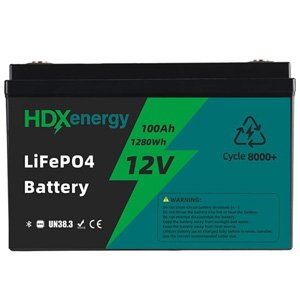
Les ampères-heures (Ah) indiquent la quantité de courant que la batterie peut fournir dans le temps à une tension nominale. Mais l'énergie - ce qui vous intéresse vraiment - est mesurée en wattheures (Wh). Pour faire la conversion, multipliez les ampères-heures par la tension nominale. Une batterie LiFePO4 de 12,8 V et 100 Ah stocke environ 1 280 wattheures (1,28 kWh) d'énergie.
Mais voici la nuance : toute cette énergie n'est pas utilisable. Les batteries au plomb ne doivent pas être déchargées au-delà de 50 % de leur capacité nominale, de sorte qu'une batterie au plomb de 100 Ah ne fournit qu'environ 640 Wh d'énergie utilisable. Une batterie LiFePO4 de 100 Ah, en revanche, peut confortablement fournir 80 à 100 % de sa capacité nominale, ce qui donne une comparaison de l'énergie utilisable d'environ 1 280 Wh contre 640 Wh, soit un avantage de 2:1 pour la même capacité nominale..
La capacité réelle dépend également du taux de décharge, grâce à l'effet Peukert. À des taux de décharge élevés, toutes les batteries perdent de la capacité effective, mais la batterie LiFePO4 résiste beaucoup mieux que la batterie au plomb. Une batterie LiFePO4 conserve environ 95 % de sa capacité nominale à un taux de décharge de 0,5C, contre environ 70 % pour l'acide-plomb..
Lors du dimensionnement de la capacité, travaillez à rebours à partir de votre consommation quotidienne d'énergie en wattheures, ajoutez votre tampon, puis divisez par la tension de votre système pour déterminer la valeur nominale en ampères-heures requise. Vérifiez toujours que la capacité de décharge continue de la batterie (en ampères) est supérieure à la charge maximale prévue.
2.3 Configurations en série et en parallèle
La capacité est augmentée en connectant des cellules ou des modules de batterie en parallèle, tandis que la tension est augmentée en les connectant en série. Un pack décrit comme “4S3P” signifie quatre cellules en série (pour une tension nominale de 12,8 V) et trois chaînes en parallèle (pour une capacité triple de celle d'une chaîne unique).
Lors de la construction ou de l'achat d'un pack, la cohérence des cellules est d'une importance capitale. Les cellules d'une chaîne en série doivent être adaptées en termes de tension, de capacité et de résistance interne. Des cellules mal assorties créent un déséquilibre que le BMS doit constamment corriger, ce qui réduit la capacité utilisable et accélère le vieillissement. C'est pourquoi les fabricants réputés utilisent des cellules provenant du même lot de production, avec des tolérances étroites, et fournissent des documents attestant de la concordance des cellules.
2.4 Taux C et capacité de décharge
Le taux C décrit la vitesse à laquelle une batterie peut être chargée ou déchargée par rapport à sa capacité. Un taux de 1C signifie que la batterie peut se charger ou se décharger complètement en une heure. Un taux de 0,5C signifie deux heures ; un taux de 2C signifie 30 minutes.
La plupart des piles LiFePO4 standard sont conçues pour une décharge continue de 0,5C à 1C. Les cellules à taux élevé peuvent supporter une décharge continue de 2C, 3C, voire plus, mais ces cellules coûtent généralement plus cher et peuvent avoir une densité énergétique légèrement inférieure. Adaptez le taux C à votre application : un système de stockage solaire peut n'avoir besoin que d'une capacité de décharge de 0,2C, tandis qu'un chariot élévateur électrique peut exiger 2C ou plus pour gérer les charges d'accélération et de levage.
Tableau 2 : Configuration LiFePO4 recommandée par application
| Application | Tension typique | Capacité typique | Courant BMS recommandé | Exigence clé |
|---|---|---|---|---|
| VR/Camping-car | 12,8V (4S) | 100-300 Ah | 100-200 A | Protection contre le chargement à basse température |
| Marine House Bank | 12,8V (4S) | 100-400 Ah | 150-300 A | Résistance à la corrosion, résistance aux vibrations |
| Cabine hors réseau | 51,2V (16S) | 100-300 Ah | 100-200 A | Capacité de cyclage quotidien profond |
| Sauvegarde de la maison/UPS | 51,2V (16S) | 100-400 Ah | 100-200 A | Commutation rapide entre le réseau et la batterie |
| Voiturette de golf | 51,2V (16S) | 100-200 Ah | 200-400 A | Gestion d'un courant de surtension élevé |
| Lampes de rue solaires | 12,8V (4S) | 20-60 Ah | 20-60 A | Large tolérance à la température |
| Chariot élévateur | 51,2V (16S) | 200-600 Ah | 300-500 A | Décharge continue à haut débit |
| Scooter électrique | 51,2V (16S) | 30-60 Ah | 50-100 A | Léger et compact |
Source : Compilation de plusieurs références et guides d'application de l'industrie
Chapitre 3 : Le système de gestion de la batterie (BMS) - le cerveau de votre pack
Si les cellules sont le cœur de votre batterie, le BMS en est le cerveau. Une batterie LiFePO4 dépourvue d'un BMS adéquat est, pour parler franchement, une responsabilité non garantie. Une surcharge peut détruire définitivement les cellules. Un BMS mal configuré peut provoquer des mois de coupures fantômes et de capacité gaspillée. La mise en place d'un bon BMS n'est pas facultative - c'est la différence entre une batterie qui dure une décennie et une autre qui tombe en panne au bout d'un an.
3.1 Les trois fonctions essentielles d'un système de gestion des bâtiments
Un système de gestion des bâtiments de qualité remplit trois fonctions simultanément :
Protection de l'environnement est la première fonction et la plus fondamentale. Le BMS doit couper le circuit immédiatement lorsqu'une cellule dépasse sa fenêtre de sécurité : charge supérieure à 3,65 V par cellule, décharge inférieure à 2,8 V par cellule (seuil de fonctionnement recommandé), ou lorsque le courant, la température ou les conditions de court-circuit deviennent dangereux. Sans cette couche de protection, la défaillance d'une seule cellule peut se répercuter sur l'ensemble du pack..
Équilibre est la deuxième fonction, et c'est là que de nombreuses unités BMS bon marché échouent. Les cellules individuelles dérivent naturellement en tension au cours de centaines de cycles de charge-décharge en raison des tolérances de fabrication et d'un vieillissement inégal. Sans équilibrage, la cellule la plus faible de votre pack définit la capacité utilisable de l'ensemble du pack et se dégrade le plus rapidement. Un bon BMS corrige cette dérive en permanence.
Contrôle est la troisième fonction. Un BMS intelligent suit en temps réel l'état de charge (SOC), l'état de santé (SOH), la tension par cellule, la température et le nombre de cycles. Ces données vous permettent de détecter une cellule défaillante avant qu'elle n'affecte l'ensemble de la batterie.
Un point critique : Le LiFePO4 a une courbe de décharge exceptionnellement plate par rapport aux autres chimies du lithium. Un BMS générique conçu pour le lithium-ion standard interprétera mal le SOC à travers le plateau de tension du LiFePO4 et déclenchera de fausses coupures à basse tension alors qu'il reste une capacité significative. Votre BMS doit être spécifiquement configuré pour la chimie LiFePO4..
3.2 Équilibrage actif ou passif
Cette décision a un impact direct sur la longévité et les performances de l'emballage.
Équilibrage passif fonctionne en évacuant l'excès de charge des cellules à haute tension à travers une résistance et en le dissipant sous forme de chaleur. C'est une méthode simple, peu coûteuse et efficace pour les cellules bien appariées soumises à des cycles de faible intensité. Cependant, le courant d'équilibrage n'est généralement que de 50 à 200 mA - la correction d'un déséquilibre de 500 mAh peut prendre environ 5 heures. Pour les gros packs ou les packs soumis à des cycles agressifs, l'équilibrage passif ne peut tout simplement pas suivre.
Équilibre actif transfère l'énergie des cellules à haute tension vers les cellules à basse tension par l'intermédiaire de circuits inducteurs-condensateurs, généralement à une vitesse de 1 à 5 ampères, avec une efficacité de 80 à 95 %. Il corrige le déséquilibre 10 à 50 fois plus vite que l'équilibrage passif et fonctionne tout au long du cycle de charge et de décharge, et pas seulement au sommet de la charge..
Quand choisir ?
- L'équilibrage passif est suffisant lorsque les cellules proviennent du même lot de production, que les taux de cyclage sont inférieurs ou égaux à 0,3C et que le pack n'est pas poussé à ses limites quotidiennement.
- L'équilibrage actif est recommandé lorsque le pack est de 200 Ah ou plus, que le cyclage profond quotidien est la norme, que les taux de décharge dépassent 0,5C en continu, ou que les cellules proviennent de lots mélangés ou vieillis..
3.3 Protocoles de communication et fonctions intelligentes
Les unités modernes de gestion des bâtiments sont de plus en plus souvent dotées de capacités de communication qui transforment une batterie de source d'énergie stupide en un composant de système intelligent.
Bluetooth La connectivité est désormais courante, même dans les packs de milieu de gamme, ce qui permet de surveiller la tension des cellules, la température, le SOC et le nombre de cycles à partir d'une application pour smartphone. C'est une aide précieuse pour le dépannage et la maintenance.
RS485 et bus CAN sont essentielles pour l'intégration avec les régulateurs de charge solaire, les onduleurs et les systèmes de gestion de l'énergie des bâtiments. Si vous construisez un système de stockage solaire, recherchez un BMS capable de communiquer avec votre onduleur - la communication en boucle fermée entre le BMS et l'onduleur permet un contrôle de la charge plus intelligent et un rapport SOC plus précis.
Contrôle du coussin chauffant est une caractéristique à rechercher dans les applications en climat froid. Le BMS peut contrôler un élément chauffant intégré, qui tire le courant de charge pour réchauffer les cellules au-dessus de 0°C avant d'activer la charge, ce qui permet d'éviter les dommages causés par le placage du lithium lors de la charge de cellules froides.
3.4 Gestion thermique et seuils de sécurité
La température est l'ennemie de la longévité des batteries. Les batteries LiFePO4 fonctionnent mieux entre 0°C et 45°C, et un BMS bien conçu utilise des capteurs de température pour déclencher des réactions de protection..
À basse température, le BMS doit désactiver la charge en dessous de 0°C (à moins qu'un chauffage ne soit présent et actif). À des températures élevées - typiquement supérieures à 50°C ou 55°C - le BMS doit réduire le courant de charge ou se déconnecter complètement pour éviter une dégradation accélérée. Certains BMS avancés ajustent dynamiquement le courant de charge : lorsque les températures dépassent 50°C, le taux de charge peut être réduit de 40 % pour éviter le placage du lithium et le stress thermique..
Pour les environnements exigeants, il est préférable d'opter pour des boîtiers à refroidissement actif (liquide ou air forcé) plutôt que pour des boîtiers à refroidissement passif (ailettes de convection). Le refroidissement par liquide offre une efficacité de gestion thermique de 70 à 90 %, contre 30 à 50 % pour les systèmes passifs. 50to80 par kWh au coût du système.
Chapitre 4 : Certifications et normes de sécurité
Les certifications de sécurité ne sont pas des formalités administratives : elles vous garantissent qu'une batterie a été testée dans des conditions extrêmes et qu'elle ne connaîtra pas de défaillance catastrophique dans le cadre de votre application. Pour les acheteurs B2B, les certifications sont également ce que les autorités douanières, les assureurs et les grands détaillants recherchent avant de toucher votre produit.
4.1 Le paysage de la certification
Les certifications des batteries se répartissent en trois grandes catégories : la sécurité du transport, la sécurité électrique et les performances au niveau du système.
ONU 38.3 est le point de départ non négociable. Il est obligatoire dans le monde entier pour toutes les expéditions de piles au lithium par voie aérienne, maritime et terrestre. Elle teste la simulation d'altitude, les chocs thermiques, les vibrations, les chocs, les courts-circuits externes, les chocs, les surcharges et les décharges forcées. Sans la certification UN 38.3, vos piles ne peuvent tout simplement pas être transportées légalement..
IEC 62133 est la norme internationale de sécurité pour les piles et batteries secondaires scellées portables. Elle est largement acceptée en Europe et en Asie et devient de plus en plus la norme mondiale de facto pour les batteries lithium-ion portables. Elle couvre les vibrations, les chocs, les courts-circuits externes et d'autres tests d'abus électriques et mécaniques..
UL 1642 s'applique spécifiquement aux cellules de lithium individuelles. Il teste la réaction des cellules à des conditions électriques et mécaniques extrêmes, notamment un court-circuit externe, une charge anormale, une décharge forcée, un écrasement, un impact, un choc, une vibration et un échauffement. Il a été vérifié qu'une cellule certifiée UL 1642 ne s'enflamme pas et n'explose pas dans ces conditions d'abus..
UL 1973 couvre les batteries pour le stockage stationnaire de l'énergie et les systèmes auxiliaires des véhicules électriques. Elle valide la fiabilité opérationnelle à long terme et exige désormais la démonstration de la fonctionnalité des pare-flammes en cas d'emballement thermique. C'est la norme à rechercher pour les applications de stockage résidentielles et commerciales..
UL 9540A évalue la propagation de l'emballement thermique au niveau du système, ce qui est essentiel pour les installations de stockage d'énergie à grande échelle.
4.2 Certification au niveau de la cellule et au niveau de l'emballage
Un malentendu courant consiste à croire qu'une cellule certifiée signifie automatiquement un emballage certifié. Ce n'est pas le cas. La norme UL 1642 s'applique à chaque cellule à l'intérieur. Le pack fini - cellules plus BMS plus boîtier plus câblage - nécessite sa propre certification, généralement UL 2054 ou IEC 62133 pour les applications portables, ou UL 1973 pour le stockage stationnaire..
Une cellule certifiée dans un pack mal conçu reste dangereuse. Le BMS, le câblage, les connecteurs et le boîtier présentent tous de nouveaux points de défaillance potentiels qui doivent être testés en tant que système complet.
4.3 Exigences régionales
Les exigences varient d'un marché à l'autre :
- États-Unis : Les certifications UL (UL 1642, UL 1973, UL 2054, UL 9540A) ont un poids important. Bien qu'elles ne soient pas toujours légalement obligatoires, les principaux détaillants et les compagnies d'assurance les exigent généralement.
- L'Europe : Le marquage CE est essentiel et repose souvent sur la conformité aux normes CEI (CEI 62133, CEI 62619). L'UE exige également la conformité aux normes RoHS et REACH pour des raisons de sécurité environnementale et chimique..
- Transport mondial : La norme UN 38.3 est obligatoire partout. Sans rapport d'essai UN 38.3 valide, les transporteurs n'accepteront pas les envois et les douanes peuvent retenir les marchandises..
Lors de l'évaluation d'un fournisseur de batteries, demandez les rapports d'essai réels, et pas seulement les déclarations de conformité. Un fabricant réputé fournira des documents émanant de laboratoires d'essai reconnus tels que TÜV, UL ou Intertek.
Chapitre 5 : Considérations relatives aux coûts et au coût total de possession
Le prix d'achat d'une batterie LiFePO4 n'est que le début de l'histoire des coûts. Pour prendre une décision véritablement éclairée, vous devez comprendre le coût total de possession sur toute la durée de vie de la batterie.
5.1 Coût initial et coût à vie
Les batteries LiFePO4 ont un prix initial plus élevé que les batteries plomb-acide - généralement 20 à 50 % de plus pour une capacité nominale équivalente. Mais ce chiffre est très trompeur si l'on tient compte de l'énergie utilisable, de la durée de vie et de la maintenance.
Prenons un exemple pratique : Une batterie LiFePO4 de 100 Ah, 12,8 V, pèse environ 13 kg, fournit approximativement 1 280 wattheures d'énergie utilisable et dure de 3 000 à 5 000 cycles. Une batterie plomb-acide équivalente de 100 Ah pèse environ 25 à 30 kg, ne fournit qu'environ 640 wattheures d'énergie utilisable (limitée à 50 % de DoD) et dure de 300 à 500 cycles..
Sur une durée de vie de 10 ans, vous devrez remplacer la batterie plomb-acide environ 6 à 10 fois. La batterie LiFePO4 pourrait ne jamais avoir besoin d'être remplacée. Si l'on tient compte de la main-d'œuvre de remplacement, des temps d'arrêt, des coûts d'élimination et de l'encombrement physique plus important des batteries au plomb, l'avantage en termes de coût de la durée de vie penche résolument en faveur du lithium.
5.2 Tendances des prix 2025-2026
L'économie du LiFePO4 a évolué de manière spectaculaire au cours des dernières années. En 2025, les prix mondiaux des batteries lithium-ion s'élevaient en moyenne à environ 1,5 million d'euros. 108/kWhacroiserallapplications,un8percentdeclenefromthepreviousyear,withces.a.r.l.ricesfallengabout5percenttoaround78/kWh. Pour le stockage stationnaire en particulier, les prix des packs atteindront environ $70/kWh en 2025, marquant la plus forte baisse parmi tous les segments d'application du lithium-ion.
Ces baisses de prix sont dues à la surcapacité de production de cellules, à la concurrence intense sur le marché, aux économies d'échelle et à l'évolution actuelle de l'industrie vers des chimies LFP moins coûteuses.. Toutefois, les prix n'ont pas évolué en ligne droite. Fin 2025 et début 2026, les coûts des matières premières pour le concentré de spodumène et le carbonate de lithium de qualité batterie ont fortement rebondi, poussant les prix des cellules au-dessus de 0,4 RMB/Wh (environ $55/kWh) avec des commandes urgentes dépassant 0,45 RMB/Wh.
Cette volatilité met en évidence un point important pour les marchés publics : la conclusion d'accords d'approvisionnement pendant les périodes de baisse des prix peut permettre de réaliser des économies substantielles, mais la transparence de la chaîne d'approvisionnement et la stabilité financière des fournisseurs deviennent tout aussi importantes lorsque les marchés se retournent.
5.3 Coûts cachés et compromis sur la qualité
La forte baisse des prix des batteries a créé un paysage de fournisseurs encombré et parfois chaotique. Une batterie qui coûte 20 % de moins au départ peut facilement coûter beaucoup plus cher au cours de sa durée de vie si elle se dégrade plus rapidement, si elle est assortie de conditions de garantie vagues ou si elle tombe en panne prématurément.
Les experts de l'industrie insistent désormais sur le fait qu'il ne faut pas se contenter d'un simple dollar par kWh. L'économie d'un projet dépend de l'énergie utilisable pendant la période de garantie, de l'efficacité des trajets aller-retour, de la consommation d'énergie auxiliaire (refroidissement, commandes) et des coûts d'exploitation et de maintenance réalistes sur l'ensemble du cycle de vie. Un pack légèrement moins cher qui se dégrade plus rapidement ou dont les conditions de garantie ne sont pas claires peut augmenter de manière significative le coût de revient énergétique (LCOE) et le risque du projet.
Tableau 3 : Comparaison du coût total de possession - Batterie 100Ah 12,8V (période de 10 ans)
| Facteur de coût | LiFePO4 | Plomb-acide (AGM) |
|---|---|---|
| Prix d'achat initial | 300-500 | 150-250 |
| Énergie utilisable par cycle | ~1 280 Wh | ~640 Wh |
| Durée de vie du cycle 80% DoD | 3,000-5,000 | 300-500 |
| Remplacements sur 10 ans | 0-1 | 6-10 |
| Main d'œuvre de remplacement (par événement) | 50-100 | 50-100 |
| Entretien nécessaire | Aucun | Etanchéité à l'eau, nettoyage des terminaux |
| Coût de l'élimination/du recyclage | Faible (haute recyclabilité) | Modéré (déchets de plomb) |
| Estimation du coût total de possession sur 10 ans | 400-800 | 1,200-3,000+ |
| Coût par kWh utilisable sur la durée de vie | ~0.05-0.10 | ~0.25-0.50+ |
Note : Les prix sont des estimations approximatives pour 2025-2026 et varient en fonction de la région, de la marque et du volume de commande.
Chapitre 6 : Comparaison chimique - Pourquoi LiFePO4 plutôt que d'autres options ?
Pour choisir LiFePO4 en toute confiance, vous devez comprendre comment il se positionne par rapport aux autres solutions. Le monde des batteries n'est pas unique, et chaque chimie a sa place.
6.1 LiFePO4 vs. plomb-acide
C'est la comparaison qui compte pour la plupart des applications hors réseau, des véhicules de loisirs, des bateaux et de l'alimentation de secours. Les différences sont flagrantes :
Les accumulateurs au plomb existent depuis plus de 150 ans. Elles sont peu coûteuses à l'achat, largement disponibles et bien connues. Mais elles sont lourdes, ne fournissent qu'environ la moitié de leur capacité nominale en énergie utilisable, se chargent lentement (généralement 8 à 10 heures pour une charge complète) et se dégradent rapidement lorsqu'elles sont profondément déchargées. Une batterie AGM à décharge profonde typique dure de 300 à 500 cycles à une décharge de 50 %.
Les batteries LiFePO4 pèsent environ deux fois moins pour la même capacité nominale - une batterie LiFePO4 de 100 Ah pèse environ 13 kg, contre 25 à 30 kg pour les batteries au plomb.. Ils se rechargent trois fois plus vite, offrent une efficacité de charge de 95 % contre 70 % pour les batteries au plomb et durent de 3 000 à 5 000 cycles à 80 % DoD, soit environ 10 fois la durée de vie du cycle..
6.2 LiFePO4 vs. NMC (Nickel Manganèse Cobalt)
Le NMC est la chimie que l'on retrouve dans la plupart des batteries de véhicules électriques et des centrales électriques portables. Son principal avantage est une densité énergétique plus élevée : Les batteries NMC atteignent 200 à 265 Wh/kg contre 90 à 160 Wh/kg pour LiFePO4.. Cela fait du NMC le meilleur choix lorsque l'espace et le poids sont une priorité absolue.
Cependant, le NMC s'accompagne de compromis importants. Sa durée de vie est généralement comprise entre 500 et 2 000 cycles, ce qui est beaucoup plus court que les 3 000 à 6 000+ cycles du LiFePO4.. Les batteries NMC sont plus chaudes sous charge, se dégradent plus rapidement à des températures élevées et présentent un risque plus élevé d'emballement thermique. Elles sont également plus chères par cycle, une fois que l'on tient compte de la fréquence de remplacement.
Pour les applications stationnaires - maison de secours, stockage solaire, cabines hors réseau - LiFePO4 est presque toujours le meilleur choix. Sa durée de vie plus longue, son profil de sécurité supérieur et ses performances stables lors des cycles quotidiens l'emportent sur l'avantage de la NMC en termes d'efficacité de l'espace. Le NMC est plus judicieux dans les applications où la taille compacte est essentielle et où la batterie n'est pas sollicitée en profondeur tous les jours, comme les centrales électriques portables utilisées occasionnellement pour le camping..
6.3 LiFePO4 et autres chimies du lithium
Par rapport aux anciennes technologies lithium-ion comme le LCO (oxyde de cobalt et de lithium), le LiFePO4 offre une stabilité thermique nettement supérieure. Sa structure cristalline olivine est intrinsèquement stable - les liaisons phosphate solides résistent à la décomposition à haute température, ce qui confère à LiFePO4 un seuil d'emballement thermique bien supérieur à 200 °C, contre environ 150 °C pour les cathodes à base de cobalt.
Cette stabilité thermique se traduit par une sécurité réelle. Les batteries LiFePO4 ne prennent pas feu et n'explosent pas dans des conditions qui déclencheraient un emballement thermique dans d'autres chimies du lithium. Cette marge de sécurité est inestimable pour les applications dans lesquelles les batteries sont installées dans des espaces de vie, des véhicules ou à proximité d'équipements de valeur.
La contrepartie est une tension nominale plus faible (3,2V par cellule contre 3,6V à 3,7V pour la plupart des autres chimies lithium-ion) et une densité énergétique plus faible. Mais pour la plupart des applications stationnaires et industrielles, la sécurité et la durée de vie sont bien plus importantes que la recherche du moindre wattheure par kilogramme.
Chapitre 7 : Guides de sélection spécifiques aux applications
Des applications différentes imposent des exigences différentes à une batterie. Voici comment procéder à la sélection pour les cas d'utilisation les plus courants.
7.1 Systèmes d'alimentation pour véhicules de loisirs et camping-cars
Les propriétaires de véhicules de loisirs exigent beaucoup de leurs batteries : des cycles quotidiens profonds pendant le camping, la compatibilité avec les systèmes de charge existants, la tolérance aux vibrations et aux variations de température, et un fonctionnement sûr dans les espaces de vie.
Pour la plupart des véhicules récréatifs, un pack LiFePO4 de 12,8V (4S) dans la gamme de 100 à 300 Ah est approprié. Les principaux facteurs de sélection pour les applications VR sont les exigences de capacité, la compatibilité de tension, les dimensions physiques et les systèmes de gestion de batterie intégrés. Vérifiez toujours les durées de vie et les conditions de garantie avant d'acheter.
Les caractéristiques essentielles des véhicules récréatifs à rechercher sont les suivantes :
- Protection contre le chargement à basse température : Les cellules LiFePO4 standard ne peuvent pas se charger en dessous de 0°C (32°F). Les batteries de camping haut de gamme comprennent des mécanismes d'auto-chauffage qui permettent de les charger jusqu'à -20°C, ce qui est essentiel pour le camping par temps froid..
- Compatibilité avec le système Drop-in : La plupart des convertisseurs-chargeurs modernes pour véhicules de loisirs peuvent être mis à niveau vers des modèles spécifiques au lithium avec une tension d'absorption de 14,4 à 14,6V. Les anciens systèmes peuvent nécessiter une mise à niveau professionnelle.
- Forme physique : Mesurez soigneusement votre compartiment à piles. Les piles LiFePO4 se présentent sous différentes formes et les équivalents “taille de groupe” ne sont pas tous identiques en termes de dimensions.
Un parc de batteries LiFePO4 pour véhicules de loisirs correctement dimensionné offre généralement une durée de vie de 8 à 15 ans avec 3 000 à 5 000 cycles de charge complets à 80 %, ce qui est nettement supérieur à la durée de vie de 500 à 1 000 cycles des batteries AGM..
7.2 Applications marines
Les environnements marins posent des défis uniques : vibrations constantes, exposition à l'eau salée, espaces d'installation confinés et réglementations de sécurité particulièrement strictes pour les navires à passagers.
Les avantages du LiFePO4 pour une utilisation marine sont convaincants. La chimie est intrinsèquement stable et ne présente aucun risque d'emballement thermique, ce qui est essentiel dans les espaces clos de la coque. Elle n'émet pas de fumées, contrairement aux batteries plomb-acide qui peuvent dégager de l'hydrogène pendant la charge. Enfin, sa résistance aux vibrations signifie que les connexions restent serrées et que les cellules restent saines malgré les coups de mer.
Pour les batteries de bord, les systèmes de 12,8 V sont la norme pour les petits navires, tandis que les systèmes de 25,6 V (8S) sont de plus en plus courants sur les grands bateaux. La courbe de décharge plate du LiFePO4 permet à l'électronique et à l'équipement de navigation de fonctionner à une tension stable, même lorsque la batterie approche de l'épuisement.
Principales caractéristiques spécifiques à l'environnement marin : recherchez des indices de protection IP65 ou supérieurs, des bornes résistantes à la corrosion (acier inoxydable ou cuivre étamé) et des unités BMS conçues pour résister à l'humidité élevée et à l'exposition au sel de l'environnement marin.
7.3 Stockage de l'énergie solaire
Le stockage solaire est l'application pour laquelle les caractéristiques du LiFePO4 sont les mieux adaptées. Le cyclage quotidien à partir de la charge solaire est exactement le cas d'utilisation où la longue durée de vie du cycle, l'efficacité élevée de l'aller-retour et la capacité de décharge profonde offrent une valeur maximale.
Les batteries LiFePO4 atteignent un rendement d'environ 95 % dans les applications solaires, ce qui signifie que vous ne perdez qu'environ 5 % de l'énergie entre la charge et la décharge, contre 20 à 30 % de pertes avec les batteries plomb-acide.. Au cours d'une année, cette différence d'efficacité se traduit par une augmentation significative de l'énergie utilisable à partir de la même installation solaire.
Pour le stockage solaire résidentiel, les systèmes de 51,2 V (16 S) de 100 à 300 Ah (5 à 15 kWh) constituent la solution idéale pour la plupart des maisons. Ces systèmes s'intègrent aux onduleurs hybrides populaires de fabricants tels que Victron, Sol-Ark, Schneider et Growatt.
Pour dimensionner un parc de batteries solaires, calculez votre consommation d'énergie quotidienne en wattheures, divisez-la par la tension de votre système pour déterminer les ampères-heures nécessaires, puis multipliez-la par le nombre de jours d'autonomie dont vous avez besoin (le nombre de jours pendant lesquels la batterie doit alimenter vos charges sans apport d'énergie solaire). Dans de nombreuses régions, une autonomie de 2 à 3 jours est un objectif raisonnable.
7.4 Voitures de golf et véhicules électriques
Les voiturettes de golf consomment des courants élevés - souvent de 50 à 80 ampères en continu avec des pointes bien supérieures à 100 ampères pendant l'accélération ou la montée d'une côte. Cela exige une batterie et un BMS conçus pour des taux de décharge élevés.
La plupart des conversions de chariots de golf utilisent des packs de 51,2V (16S) d'une capacité de 100 à 200 Ah. La tension plus élevée d'une configuration 16S réduit l'appel de courant pour la même puissance de sortie, ce qui signifie moins de production de chaleur, des câbles plus petits et un fonctionnement plus efficace.
Pour les voiturettes de golf en particulier, il faut s'assurer que la puissance de décharge continue du BMS dépasse le courant maximal de la voiturette avec une marge de sécurité. Un BMS de 200 A en continu est un minimum courant pour les chariots de golf standard ; les chariots à hautes performances ou surélevés avec des pneus plus larges peuvent nécessiter 300 A ou plus.
7.5 Applications industrielles et chariots élévateurs
Les batteries industrielles travaillent dur. Les chariots élévateurs fonctionnant en plusieurs équipes par jour effectuent des cycles profonds et se déchargent rapidement. Dans ces applications, la capacité de LiFePO4 à effectuer des charges d'opportunité - c'est-à-dire à se recharger pendant les pauses sans endommager la batterie - change la donne par rapport à l'acide-plomb, qui nécessite des cycles de charge complets pour éviter la sulfatation.
Les packs industriels LiFePO4 fonctionnent généralement à des tensions plus élevées (48V à 80V nominal) et nécessitent des unités BMS avec une gestion thermique robuste, y compris un refroidissement actif dans les environnements exigeants. Dans ces applications, le BMS doit également être conforme aux normes de sécurité industrielle pertinentes, telles que la norme ISO 13849 relative à la sécurité des machines..
Chapitre 8 : Évaluation et sélection d'un fournisseur
La qualité de la batterie que vous achetez dépend de celle de l'entreprise qui la commercialise. Sur un marché inondé de nouveaux entrants, la sélection des fournisseurs mérite autant d'attention que les spécifications techniques.
8.1 Ce qu'il faut rechercher chez un fabricant
Le marché mondial des batteries LiFePO4 est dominé par des acteurs majeurs tels que CATL, BYD, EVE Energy et plusieurs autres, principalement basés en Chine, qui représente environ 70 % de la capacité de production mondiale.. Toutefois, d'importantes capacités de production existent également aux États-Unis (A123 Systems, KORE Power), en Europe (EVE Energy Europe, Super B, Pylontech) et dans d'autres régions..
Les principaux indicateurs d'un fournisseur de qualité sont les suivants
- Certifications ISO 9001 et ISO 14001 pour la gestion de la qualité et de l'environnement
- Certifications au niveau cellulaire y compris UL 1642 et UN 38.3
- Certifications au niveau du paquet y compris IEC 62133, UL 1973 ou UL 2054 selon le cas
- Des conditions de garantie transparentes qui définissent clairement les garanties de durée de vie, les seuils de rétention de capacité et les procédures de réclamation au titre de la garantie
- Transparence de la chaîne d'approvisionnement : Les principaux fournisseurs peuvent vous dire exactement quelle usine a produit leurs cellules, quel BMS est utilisé et comment le pack est intégré.
- Historique : depuis combien de temps l'entreprise existe-t-elle et que disent les critiques et références indépendantes ?
8.2 Questions à poser avant d'acheter
Avant de vous engager avec un fournisseur, posez les questions suivantes :
- “Pouvez-vous fournir le rapport de test UL 1642 pour les cellules utilisées dans ce pack et le rapport de test UL 1973 ou IEC 62133 pour le pack fini ?”
- “Quelle est la période de garantie et à partir de quel seuil de rétention de capacité (par exemple, 80 %, 70 %) une réclamation au titre de la garantie est-elle déclenchée ? Pour combien de cycles la garantie est-elle valable ?”
- “Quel est le taux de défectuosité de votre ligne de production ? Pouvez-vous fournir un certificat d'analyse pour le lot spécifique ?”
- “Où les cellules sont-elles fabriquées ? Quelle marque et quel modèle de BMS sont utilisés ?”
- “Quel est votre délai de livraison pour cette configuration et quelle est la documentation d'expédition (fiche de données de sécurité, UN 38.3) incluse ?”
8.3 Drapeaux rouges à surveiller
Méfiez-vous des fournisseurs qui :
- Ne peut ou ne veut pas fournir de rapports d'essais de laboratoires reconnus
- Proposer des prix qui semblent trop beaux pour être vrais (c'est généralement le cas).
- Ne peut pas expliquer clairement les spécifications de son système de gestion des bâtiments
- Les conditions de garantie sont vagues et les seuils de rétention de la capacité ne sont pas définis.
- Utiliser des cellules provenant de sources inconnues ou invérifiables
- n'ont pas d'antécédents ou de références clients vérifiables
Chapitre 9 : Meilleures pratiques en matière d'installation, d'entretien et de longévité
Même la batterie la mieux choisie sera moins performante si elle est mal installée ou négligée. Voici comment maximiser la durée de vie de votre investissement.
9.1 Directives d'installation
Installez votre batterie dans un endroit qui reste dans sa plage de température nominale. Évitez la lumière directe du soleil, les enceintes non ventilées et les endroits soumis à un froid extrême. Veillez à ce que l'espace autour de la batterie soit suffisant pour permettre la dissipation de la chaleur.
Utilisez des câbles de taille appropriée à la consommation de courant prévue. Des câbles sous-dimensionnés créent une résistance, génèrent de la chaleur et réduisent l'efficacité du système. Toutes les connexions doivent être correctement serrées selon les spécifications du fabricant - les connexions lâches entraînent une chute de tension et peuvent provoquer des arcs électriques sous charge.
Si vous connectez plusieurs batteries en série ou en parallèle, toutes les unités doivent avoir une tension et une capacité identiques et, idéalement, provenir du même lot de production. Des batteries mal assorties dans un groupe s'éloigneront l'une de l'autre en termes de tension et de capacité au fil du temps, ce qui obligera le BMS à travailler plus dur et réduira la capacité totale utilisable.
9.2 Meilleures pratiques en matière de recharge
Utilisez un chargeur spécialement conçu pour la chimie LiFePO4. La tension d'absorption pour un pack LiFePO4 de 12V est typiquement de 14,4 à 14,6V, avec une tension de flottement de 13,6V. L'utilisation d'un chargeur plomb-acide avec des tensions d'absorption plus élevées ou un mode d'égalisation peut entraîner une surcharge et endommager de façon permanente les cellules au lithium.
Pour un stockage à long terme, conservez la batterie à environ 50 % de son état de charge dans un environnement frais (15 à 25 °C). Rechargez la batterie à 50 % tous les 3 mois en cas de stockage prolongé..
Les batteries au lithium préfèrent en fait les cycles de décharge partielle plutôt que complète. Le fait de maintenir les cycles entre 20 et 80 % de l'état de charge peut prolonger la durée de vie d'environ 25 % par rapport à une décharge régulière jusqu'à ce que la batterie soit presque vide..
9.3 Surveillance et entretien
Un BMS intelligent doté d'une connectivité Bluetooth facilite considérablement la maintenance. Vérifiez régulièrement l'équilibre de la tension des cellules - les cellules individuelles doivent rester dans une fourchette de 50 à 100 mV les unes des autres. Un déséquilibre croissant est le signe d'un problème qui peut nécessiter une intervention avant d'entraîner l'arrêt du BMS.
Nettoyer les bornes chaque année à l'aide d'une brosse métallique ou d'un nettoyant pour bornes et appliquer de la graisse diélectrique pour éviter la corrosion. Vérifiez que toutes les connexions sont bien serrées. Inspecter les câbles pour détecter tout signe d'usure, de fissure ou de dommage dû à la chaleur.
Pour les packs sans BMS intégré, effectuez une vérification manuelle de l'équilibre des cellules tous les 6 mois à l'aide d'un multimètre. Toute cellule dont la lecture est significativement différente de celle de ses voisines peut nécessiter un remplacement.
Chapitre 10 : L'avenir de la technologie LiFePO4
Le paysage du LiFePO4 continue d'évoluer rapidement. Comprendre les tendances émergentes vous aide à faire un choix qui ne sera pas obsolète dans deux ans.
10.1 Densité énergétique plus élevée
Les cellules LiFePO4 actuelles fournissent 90 à 160 Wh/kg au niveau de la cellule. Les efforts de recherche et de développement visent à atteindre 170 Wh/kg grâce au nano-revêtement des électrodes, à l'optimisation de l'ingénierie des particules et à l'amélioration des formulations d'électrolytes.. Même si le LiFePO4 n'atteindra probablement jamais la densité énergétique des produits chimiques NMC ou NCA, l'écart se réduit à chaque génération.
10.2 Modèles à semi-conducteurs et modèles avancés
Les prototypes LiFePO4 à l'état solide ont démontré des densités d'énergie proches de 300 Wh/kg en laboratoire. La conception de la batterie à lames de BYD, qui utilise de longues et fines cellules prismatiques servant d'éléments structurels, a permis de réduire les coûts des packs d'environ 25 % tout en améliorant l'utilisation de l'espace.. Ces innovations passent progressivement des applications automobiles aux marchés du stockage stationnaire et des batteries industrielles.
10.3 BMS plus intelligent et capacités prédictives
Les systèmes de gestion des batteries deviennent de plus en plus intelligents. Les architectures BMS sans fil éliminent les faisceaux de câbles internes, ce qui améliore la fiabilité et réduit la complexité de la fabrication. Les algorithmes prédictifs analysent les schémas d'utilisation historiques pour anticiper les besoins en énergie et optimiser les cycles de charge et de décharge. La technologie des jumeaux numériques - répliques virtuelles des batteries physiques - permet une maintenance prédictive en simulant le vieillissement et en identifiant les défaillances potentielles avant qu'elles ne se produisent.
10.4 Durabilité et économie circulaire
Les avantages environnementaux de LiFePO4 vont au-delà de sa chimie sans cobalt. Les matériaux sont recyclables à 95 % grâce à des procédés hydrométallurgiques en boucle fermée qui récupèrent le lithium, le fer, le phosphate et l'aluminium. Les principaux fabricants investissent dans des usines zéro carbone alimentées par des énergies renouvelables et mettent en œuvre un suivi de la chaîne d'approvisionnement basé sur la blockchain pour vérifier l'approvisionnement éthique des matières premières.
À mesure que les infrastructures de recyclage se développent et que la pression réglementaire sur les déchets de batteries augmente, la recyclabilité inhérente au LiFePO4 deviendra un facteur de plus en plus important dans les décisions d'achat, en particulier pour les projets commerciaux et d'utilité publique à grande échelle.
Questions fréquemment posées
Q1 : Comment savoir si j'ai besoin d'un système de batteries LiFePO4 de 12V, 24V ou 48V ?
Le choix de la tension du système dépend principalement de vos besoins en énergie et de l'équipement existant. Pour les petits systèmes de moins de 3 000 watts (camping-cars, petits bateaux, installations portables), le 12 V est la norme et offre la plus grande compatibilité avec les appareils et les chargeurs disponibles sur le marché. Pour les systèmes moyens de 3 000 à 5 000 watts, le 24 V est une bonne solution intermédiaire qui réduit le courant (et donc la taille des câbles et les pertes) tout en restant compatible avec une large gamme d'équipements. Pour les systèmes de plus de 5 000 watts - maison de secours, cabanes hors réseau, stockage commercial - il est fortement recommandé d'utiliser une tension de 48V. Une tension plus élevée signifie un courant plus faible pour la même puissance de sortie, ce qui se traduit par des câbles plus petits et moins chers, moins de production de chaleur et une plus grande efficacité globale du système.
Q2 : Puis-je mélanger d'anciennes et de nouvelles batteries LiFePO4 dans le même groupe ?
En général, non, et c'est une cause fréquente de défaillance prématurée du parc de batteries. Lorsque vous connectez des batteries en parallèle, l'ensemble du parc s'adapte à la tension de l'unité la plus faible. Une batterie plus ancienne, à la capacité réduite et à la résistance interne plus élevée, diminue les performances d'une batterie neuve connectée à côté d'elle. Avec le temps, le décalage s'aggrave car les batteries vieillissent à des rythmes différents. Si vous avez besoin d'augmenter la capacité, il est préférable d'ajouter de nouvelles batteries dans les 6 à 12 mois suivant l'installation initiale, provenant du même fabricant et idéalement du même lot de production. Au-delà de cette période, il faut envisager un parc de batteries séparé, avec son propre système de gestion des bâtiments et son propre régulateur de charge.
Q3 : Quelles certifications dois-je absolument exiger de mon fournisseur de batteries ?
Au minimum, il faut ONU 38.3 (obligatoire pour le transport) et soit IEC 62133 ou UL 1642 (sécurité au niveau des cellules). Pour les applications de stockage stationnaire, il faut également UL 1973. Pour les emballages vendus sur le marché américain, UL 2054 est souvent exigée par les détaillants et les compagnies d'assurance. Pour le stockage d'énergie à grande échelle, UL 9540A (test de propagation de l'emballement thermique) est de plus en plus souvent exigé par les codes de prévention des incendies et les autorités chargées de délivrer les permis. Demandez toujours les rapports d'essais réels à des laboratoires reconnus - et pas seulement la déclaration de conformité d'un fournisseur - et vérifiez que la certification s'applique à l'emballage fini, et pas seulement aux cellules individuelles qu'il contient.
Q4 : Quelle est la durée de vie d'une batterie LiFePO4 de qualité dans des conditions réelles ?
Une batterie LiFePO4 correctement spécifiée, correctement installée et bien entretenue devrait offrir une durée de vie de 8 à 15 ans dans des applications de cyclage typiques, en réalisant 3 000 à 5 000 cycles complets de charge et de décharge à une profondeur de décharge de 80 %.. Dans les applications plus légères, comme l'alimentation de secours occasionnelle, où la batterie est maintenue à un niveau de charge modéré et n'est pas soumise à des cycles fréquents, la durée de vie peut atteindre 15 à 20 ans. Les variables clés qui affectent la durée de vie réelle sont la température de fonctionnement (la garder au frais), la profondeur de décharge (les cycles moins profonds prolongent la durée de vie), le taux de charge (le plus lent est le plus doux) et la qualité du BMS (l'équilibrage actif et la gestion thermique appropriée font une différence mesurable).
Q5 : L'installation d'une batterie LiFePO4 à l'intérieur de mon habitation est-elle sans danger ?
Oui, et c'est l'un des avantages déterminants de LiFePO4 par rapport aux autres chimies du lithium. La structure cristalline olivine du LiFePO4 est intrinsèquement stable sur le plan thermique. Les fortes liaisons phosphate résistent à la décomposition à haute température, ce qui confère au LiFePO4 un seuil d'emballement thermique supérieur à 200°C, bien plus élevé que celui des chimies NMC ou NCA. Les batteries LiFePO4 n'émettent pas de gaz inflammables en fonctionnement normal, contrairement aux batteries plomb-acide qui peuvent dégager de l'hydrogène. Pour les installations intérieures, il faut s'assurer que la batterie porte les certifications de sécurité appropriées (IEC 62133 ou UL 1973), qu'elle est installée avec une ventilation adéquate (non pas à cause des dégagements gazeux, mais pour la dissipation de la chaleur), et qu'elle est protégée des dommages physiques et de la lumière directe du soleil.
Q6 : Comment dimensionner une batterie LiFePO4 pour le stockage solaire ?
Commencez par votre consommation d'énergie quotidienne en wattheures, calculée à partir d'un audit énergétique de toutes les charges connectées. Ajoutez une marge de 20 à 25 % pour les pertes de l'onduleur et les inefficacités du système. Divisez le résultat par la tension de votre système pour déterminer la capacité en ampères-heure requise. Déterminez ensuite le nombre de jours d'autonomie (jours sans apport solaire) dont vous avez besoin, généralement 2 à 3 jours pour la plupart des systèmes résidentiels. Multipliez votre besoin quotidien en ampères-heure par le nombre de jours d'autonomie pour obtenir la taille totale de votre parc de batteries. Par exemple, une maison consommant 10 000 Wh par jour sur un système de 48 V a besoin d'environ 208 Ah par jour (10 000 ÷ 48 = 208). Avec un tampon de 25 %, ce chiffre passe à 260 Ah. Pour trois jours d'autonomie, la taille totale de la banque doit être d'environ 780 Ah à 48 V (environ 37,5 kWh).
Conclusion : Faire le bon choix
Le choix du bon pack de batteries LiFePO4 se résume à une série de décisions : comprendre les besoins énergétiques réels de votre application, dimensionner correctement la tension et la capacité, sélectionner un BMS avec les bonnes caractéristiques pour votre cas d'utilisation, vérifier les certifications de sécurité, évaluer le coût total de possession plutôt que le simple prix d'achat, et sélectionner un fournisseur ayant la capacité technique et la transparence pour vous soutenir à long terme.
Le marché continue d'évoluer rapidement. Les prix ont chuté de manière spectaculaire - les prix des packs de stockage stationnaires ont atteint environ $70/kWh en 2025 - rendant le LiFePO4 plus accessible que jamais.. Le marché mondial devrait atteindre 77,07 milliards de dollars d'ici 2034, sous l'effet de l'accélération de l'adoption des VE, de l'intégration des énergies renouvelables et de l'électrification industrielle..
Mais la baisse des prix nous oblige à faire des choix judicieux. Une batterie est un investissement à long terme. Le bon choix fournira une énergie fiable pendant une décennie ou plus. Un mauvais choix sera une source permanente de frustration, de temps d'arrêt imprévus et de coûts de remplacement prématurés. Prenez le temps de spécifier correctement vos besoins. Posez les questions difficiles à votre fournisseur. Vérifiez les certifications. Votre avenir et votre équipement vous remercieront.