Imagine this scenario: A severe storm hits your neighborhood. The grid goes down. Your neighbor’s lights flicker and die, plunging their home into darkness. But in your house, the lights stay on, the refrigerator keeps humming, and most importantly, your central air conditioning or well pump continues to run without a hitch.
How is this possible? It’s not magic; it’s engineering. specifically, it’s the power of a Split-Phase Home Battery System.
If you are exploring energy independence, you have likely encountered terms like “120V,” “240V,” “single-phase,” and “split-phase.” It can get confusing fast. But here is the bottom line: If you live in North America (or regions with similar grid standards) and want true whole-home backup, you need to understand split-phase power.
At HDX Energy, we specialize in cutting-edge energy storage. Whether you are looking for a sleek Home Battery Storage unit or a robust All-in-one Battery Energy system, we believe an educated customer is our best customer.
In this deep-dive guide, we will dismantle the technical jargon and explain exactly what a split-phase battery is, why it is superior for modern homes, and how to choose the right one.
1. The Anatomy of Power: Understanding the “Split-Phase” Grid
To understand the battery, we first need to understand the plug in your wall.
In most of Europe and Asia, electricity is delivered as “Single-Phase” 230V. It is simple: one hot wire, one neutral. However, in North America (USA, Canada, Mexico) and parts of Latin America, the grid uses a Split-Phase 120V/240V topology.
How It Works (Simplified)
Think of electricity like water flowing through pipes.
- The Service Line: The utility company sends 240V to your home via a transformer.
- The “Split”: This transformer has a center tap (neutral). This splits the 240V into two “legs” of 120V each.
- The Result:
- Leg 1 + Neutral = 120V (Powers your lights, TV, phone chargers).
- Leg 2 + Neutral = 120V (Powers your kitchen outlets, fans).
- Leg 1 + Leg 2 = 240V (Powers your heavy hitters: HVAC, Water Heater, EV Charger).
The Problem with Standard Batteries
Many entry-level portable power stations or basic inverters only output 120V single-phase. If you connect a 120V battery to your home:
- You can only power half of your breaker panel.
- You cannot run 240V appliances. Your Central AC, electric dryer, and deep well pump will simply not work.
This is where a dedicated Split-Phase Home Battery changes the game.
💡 Pro Tip: If you are looking for a smaller solution just for camping or charging devices, a Portable Power Station is fantastic. But for powering a house? You need the heavy artillery.
2. What Is a Split-Phase Home Battery?
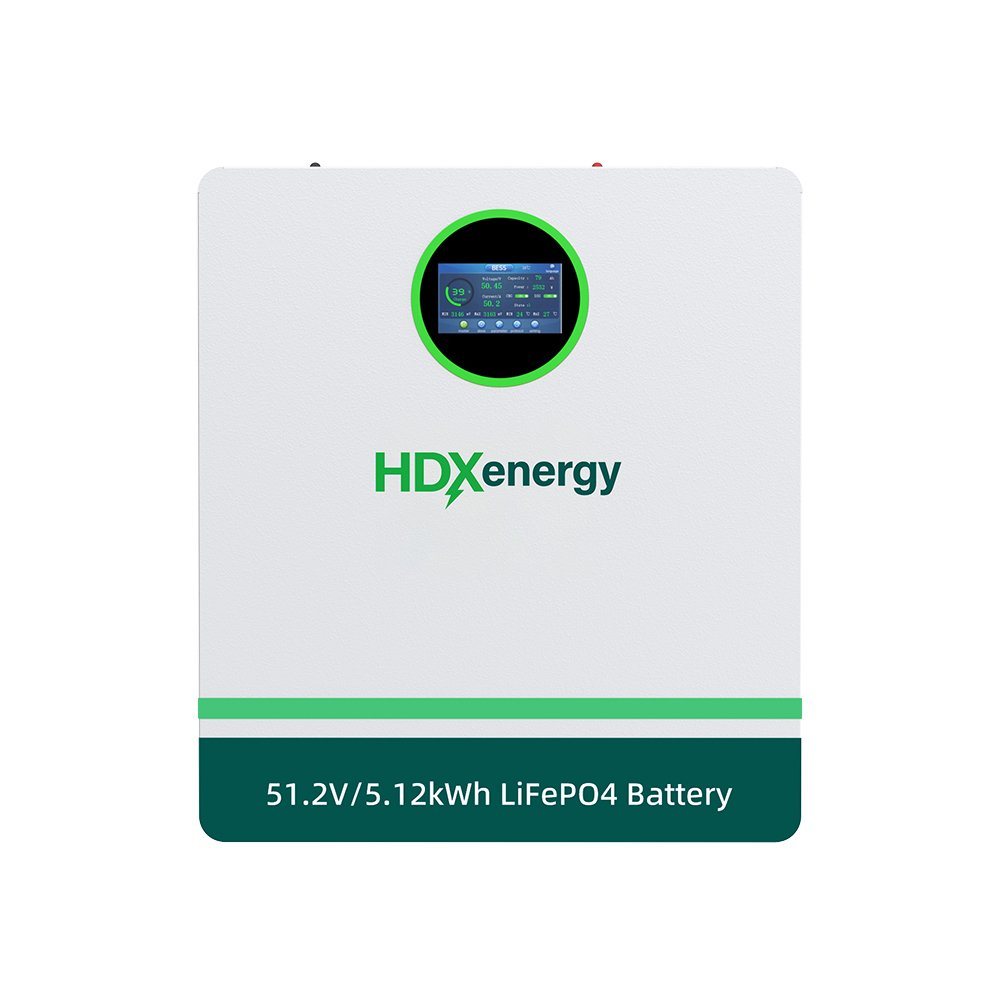
A split-phase battery system is an energy storage solution capable of outputting both 120V and 240V simultaneously, perfectly mimicking the grid’s behavior.
Unlike a standard single-phase inverter that needs complex external transformers to step up voltage (which loses efficiency), a true split-phase inverter generates two 120V waveforms that are 180 degrees out of phase. When combined, they create 240V.
Core Components of the System
A high-performance system from HDX Energy typically includes:
- LiFePO4 Battery Modules: We use Lithium Iron Phosphate chemistry for maximum safety and longevity (more on this later).
- Split-Phase Inverter: The brain of the operation. It manages the 120/240V output.
- BMS (Battery Management System): Ensures cells are balanced and protected.
Why “True” Split-Phase Matters
Some competitors sell two separate 120V inverters and tell you to “stack” them. While this can work, it introduces communication latency and potential sync issues. An All-in-one Battery Energy system with native split-phase capability is cleaner, easier to install, and more reliable.
3. The Major Benefits: Why Upgrade to Split-Phase?
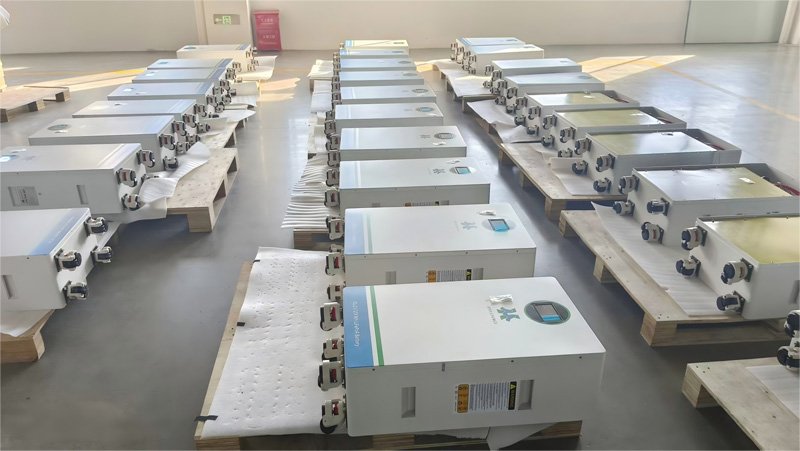
You might be asking, “Do I really need this? Can’t I just back up my lights?” Sure, you could. But modern life relies on 240V appliances more than you think. Here is why upgrading to a split-phase system—like our Floor-Standing Lithium Battery series—is a smart investment.
A. Whole-Home Backup (No Compromises)
With a 120V system, you have to pick and choose “critical loads.” You create a tiny sub-panel for just the fridge and internet. With a Split-Phase system, you can back up the Main Panel. When the grid fails, your lifestyle doesn’t change. You can still:
- Cook on your electric range.
- Dry your clothes.
- Keep the house cool in summer or warm in winter (HVAC).
B. EV Charging Capabilities
The electric vehicle revolution is here. Almost all Electric Vehicle Charging Stations require 240V Level 2 charging. A split-phase battery system allows you to charge your EV from stored solar energy overnight, even if the grid is down. This is true energy independence.
C. Solar Efficiency
Most residential solar arrays in North America are designed to feed into a 240V breaker. A split-phase battery system integrates seamlessly with existing Solar Energy Storage Systems, allowing for efficient AC or DC coupling without messy rewiring.
4. Technical Deep Dive: 120V vs. 240V Load Analysis
To help you visualize why split-phase is essential, let’s look at the power requirements of common household appliances.
Table 1: Common Household Voltage Requirements
| Appliance Category | Typical Voltage | Requires Split-Phase? |
|---|---|---|
| LED Lighting | 120V | No |
| Refrigerator / Freezer | 120V | No |
| TV / Computer / Wi-Fi | 120V | No |
| Central Air Conditioning | 240V | YES |
| Electric Clothes Dryer | 240V | YES |
| Electric Water Heater | 240V | YES |
| Well Pump | 240V | YES |
| EV Charger (Level 2) | 240V | YES |
| Electric Range/Oven | 240V | YES |
Data Source: Based on standard NEC (National Electrical Code) appliance standards.
As you can see, the “survival” items (lights, fridge) are 120V, but the “comfort” items (AC, hot water, cooking) are almost exclusively 240V. A split-phase battery bridges this gap.
5. Why LiFePO4 is the Best Chemistry for Split-Phase Systems
When designing a high-load system capable of outputting 240V, the battery chemistry is critical. You need power density, safety, and longevity.
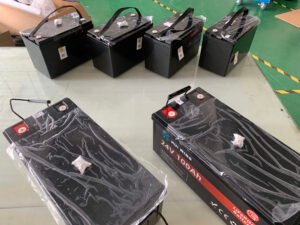
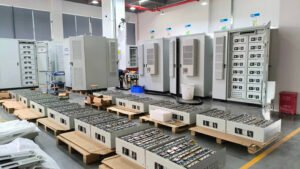
At HDX Energy, we exclusively utilize LiFePO4 (Lithium Iron Phosphate) technology across our range, from our massive commercial units to our 12V LiFePO4 Battery replacements.
Safety First
Older Lithium-ion batteries (NMC/NCA) are prone to thermal runaway if damaged. LiFePO4 is chemically stable. It does not catch fire or explode under normal operating conditions. For a battery sitting in your garage or basement, this peace of mind is non-negotiable.
Cycle Life
- Lead Acid: ~500 cycles.
- Standard Lithium (NMC): ~800-1,500 cycles.
- HDX Energy LiFePO4: 4,000 to 6,000+ cycles.
A split-phase system is a long-term infrastructure investment. You want a battery that will last 10-15 years, not 3.
High Discharge Capability
Starting a 240V Air Conditioner requires a massive surge of power (inrush current). LiFePO4 batteries have excellent surge capabilities, ensuring your heavy appliances start up without tripping the inverter.
Explore More: Check out our LiFePO4 Battery page to learn more about the chemistry that powers our innovations.
6. Buying Guide: How to Choose the Right Split-Phase System
Ready to make the switch? Here is a checklist for buyers to ensure you get the right system for your home.
1. Calculate Your Load (Continuous vs. Surge)
Don’t just guess. Look at the labels on your appliances.
- Continuous Power: The watts needed to keep things running. (e.g., 5kW).
- Surge Power: The spike needed to start motors. (e.g., 10kW). Ensure your split-phase inverter can handle the surge of your largest 240V appliance.
2. Capacity (kWh)
Power (kW) is how fast you can drain energy; Capacity (kWh) is how much fuel is in the tank. For a whole-home split-phase system, we recommend a minimum of 10kWh to 15kWh for basic backup. For off-grid living, you may need to stack modules to reach 30kWh+.
- Solution: Our scalable Home Battery Storage allows you to start small and add more battery modules later.
3. All-in-One vs. Modular
- All-in-One: Inverter and battery in one box. Easiest to install, looks great. Perfect for garages.
- Modular: Separate inverter and battery rack. More flexible for tight spaces or custom large-scale setups.
4. Compatibility
If you have solar panels already, check if the system is “AC Coupled” (works with existing solar inverters) or “DC Coupled” (replaces the solar inverter). HDX Energy offers solutions for both scenarios.
Conclusion: The Future of Home Energy is Split-Phase
The days of relying solely on an unstable grid are fading. As storms get stronger and electricity prices rise, the ability to generate, store, and use your own power is becoming a necessity, not a luxury.
A Split-Phase Home Battery is the key that unlocks the full potential of your home. It allows you to live without compromise, powering everything from your bedside lamp to your central air conditioning with clean, renewable energy.
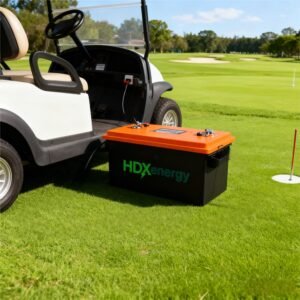
At HDX Energy, we are committed to providing robust, safe, and high-performance energy solutions to the world. From Golf Cart Lithium Battery upgrades to full-scale commercial storage, we power your life.
Ready to secure your home’s energy future? Explore our range of Solar Energy Storage Systems today or contact our team for a custom consultation.
Frequently Asked Questions (FAQ)
Q1: Can I use a split-phase battery if I don’t have solar panels? A: Absolutely. You can use the battery for “Grid Arbitrage.” Charge the battery from the grid when electricity is cheap (off-peak), and discharge it to power your home when rates are high (peak hours). It also serves as a massive UPS for blackouts.
Q2: How is split-phase different from 3-phase? A: Split-phase (120V/240V) is standard for residential homes in North America. 3-phase (typically 120V/208V or 277V/480V) is used for commercial and industrial buildings to run heavy machinery. Do not buy a 3-phase industrial battery for a standard American home unless you have a specific 3-phase service connection.
Q3: Can I run my Central AC with an HDX Energy split-phase battery? A: Yes, provided the inverter’s power rating (kW) meets your AC’s requirements. Most central AC units require a “Soft Start” kit to reduce the startup surge, making it easier for batteries to run them.
Q4: Is installation difficult? A: Installing a split-phase system involves working with the main breaker panel and high voltage (240V). It must be installed by a licensed electrician. However, our All-in-one Battery Energy designs significantly reduce installation time and complexity compared to DIY component systems.
Q5: What is the lifespan of your batteries? A: HDX Energy uses premium LiFePO4 cells designed for 6,000+ cycles at 80% Depth of Discharge (DOD). If you cycle it once a day, that is over 15 years of reliable service.