If you are reading this, you probably already know that Lithium Iron Phosphate (LiFePO4 or LFP) chemistry has become the gold standard for modern energy storage. Whether you are an engineer designing a Microgrid Solution, a business owner looking to upgrade a fleet of golf carts, or a DIY enthusiast aiming for energy independence, the battery pack is the beating heart of your system.
But here is the truth: buying raw cells is the easy part. Turning those cells into a safe, reliable, and high-performance battery pack? That is an art form rooted in rigorous engineering.
At HDX Energy, we have spent years refining battery storage technologies, from massive Container Series ESS units to portable power stations. Today, we are pulling back the curtain to show you exactly how to design a LiFePO4 battery pack that stands the test of time.
1. Cell Selection and Matching: The Foundation of Performance
You cannot build a skyscraper on a swamp, and you cannot build a high-performance battery pack with mismatched cells. The first step in design is selecting the right form factor and ensuring cell consistency.
Prismatic vs. Cylindrical: Which is Right for You?
When designing your pack, you generally have two main choices for LFP chemistry:
- Prismatic Cells: These are large, rectangular brick-like cells. They are fantastic for high-capacity applications like Home Battery Storage or electric vehicles because they maximize space efficiency. They use fewer connections for the same capacity compared to cylindrical cells.
- Cylindrical Cells (e.g., 32700): These look like oversized AA batteries. They are excellent for applications requiring high mechanical stability and airflow, often used in smaller portable tools or complex geometries.
For most high-performance energy storage applications (like our Power Storage Wall), Prismatic cells are the preferred choice due to their higher energy density per volume and simplified assembly for large kWh systems.
The “Golden Rule” of Cell Matching
This is where many beginners fail. You must match your cells based on three critical parameters before assembly:
- Capacity (mAh/Ah)
- Voltage (V)
- Internal Resistance (mΩ)
If you mix a cell with high internal resistance with one that has low resistance, the weaker cell will heat up faster and degrade the entire pack’s lifespan.
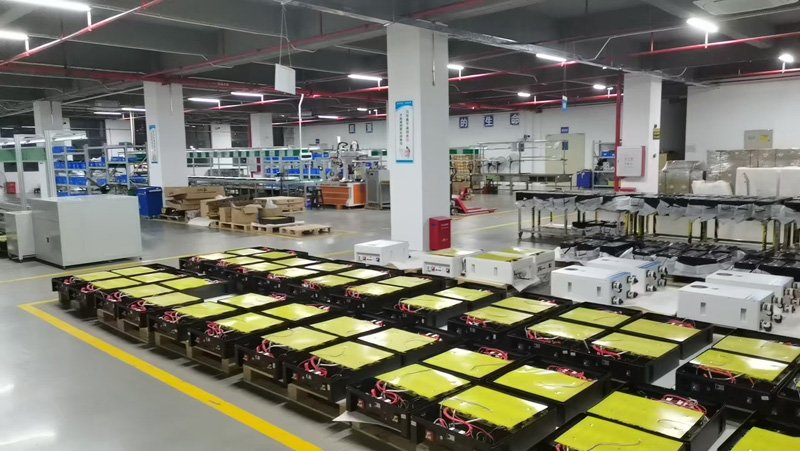
Pro Tip: At HDX Energy, we use automotive-grade sorting machines to ensure every cell in our All-in-one Battery Energy Storage System is perfectly matched. For your design, aim for a capacity difference of less than 1% between cells.
2. Configuration Topology: Calculating Series and Parallel (S & P)
Once you have your cells, you need to determine the architecture. This is defined by “Series” (S) for voltage and “Parallel” (P) for capacity.
- Series (S): Increases Voltage. (e.g., 16 cells of 3.2V in series = 51.2V).
- Parallel (P): Increases Capacity (Amps/Hours). (e.g., 2 cells of 100Ah in parallel = 200Ah).
Design Scenario: Building a 51.2V 100Ah Battery
Let’s say you want to design a battery similar to our popular 51.2V 105Ah Golf Cart Battery.
- Target Voltage: 51.2V nominal.
- Since one LFP cell is 3.2V nominal: 51.2V/3.2V=16 Cells in Series (16S).
- Target Capacity: 100Ah.
- If you use 100Ah prismatic cells, you only need 1 string in parallel (1P).
- If you use 3.2V 6Ah cylindrical cells, you need: 100Ah/6Ah=16.6 (round up to 17) Parallel cells (17P).
The topology would be:
- Using Prismatic: 16S1P (Total 16 cells). Simple, fewer connection points, lower resistance.
- Using Cylindrical: 16S17P (Total 272 cells). Complex, requires extensive spot welding.
For high-current applications, minimizing the number of parallel connections by using larger cells (like in our Wall Mounted EV Charging solutions) usually results in better reliability.
3. The Brain of the Operation: The BMS (Battery Management System)

Never, ever design a lithium battery without a BMS. It is the bridge between a safe energy source and a potential thermal hazard.
A high-performance BMS does more than just cut off power. It actively manages the health of the battery.
Key BMS Functions to Look For:
- Overcharge/Over-discharge Protection: LFP cells should not go above 3.65V or below 2.50V.
- Temperature Monitoring: High-end packs like our Cabinet Series use multiple temperature sensors (NTCs) placed throughout the pack to detect hot spots.
- Cell Balancing:
- Passive Balancing: Bleeds off energy from high-voltage cells through resistors (common in low-cost options).
- Active Balancing: Transfers energy from high-voltage cells to low-voltage cells. This is crucial for large systems like Commercial and Industrial Energy Storage to maximize efficiency and cycle life.
- Communication Protocols: CAN Bus, RS485, or RS232. This allows the battery to “talk” to the solar inverter or EV charger.
| Feature | Standard BMS | Smart High-Performance BMS |
|---|---|---|
| Balancing Current | 30-50mA | 1A – 5A (Active) |
| Communication | None / Simple Bluetooth | CAN / RS485 / Cloud Monitoring |
| Thermal Mgmt | Single Sensor | Multi-point Matrix |
| Application | Small Toys, Basic Lamps | Solar Energy Storage System, EVs |
4. Thermal Management and Structural Design
Lithium cells generate heat when charging and discharging, especially at high C-rates (fast charging). Heat is the enemy of longevity.
Heat Dissipation Strategies
For a 12V LiFePO4 Battery, passive air cooling is usually sufficient. However, when you step up to high-voltage systems:
- Air Channels: Design the casing with specific gaps between cells (usually 2-3mm) to allow airflow.
- Heat Sinks: The BMS MOSFETs generate significant heat; ensure they are attached to a large aluminum heat sink or the metal case itself.
- Compression: Prismatic LFP cells tend to swell slightly over thousands of cycles. A professional design includes a fixture or strapping mechanism to apply constant compression pressure (approx. 10-12 PSI). This prevents delamination of internal electrode materials and significantly extends cycle life.
Vibration Resistance
If you are designing for mobility, such as a Golf Cart Lithium Battery or for an RV, vibration is a major factor.
- Use Epoxy board (FR4) between cells for insulation and rigidity.
- Use high-density EVA foam padding to cushion the cells within the metal enclosure.
- Ensure all busbar connections are flexible (using braided copper or expansion joints) to prevent fatigue cracking.
5. Interconnections: Busbars and Insulation
The electrical path is where efficiency is won or lost. Using a wire that is too thin will cause voltage drop and heat.
Copper vs. Aluminum Busbars
- Copper: Best conductivity. Ideal for compact, high-power packs.
- Aluminum: Lighter and cheaper, but requires more cross-sectional area to carry the same current.
For a high-performance LiFePO4 Battery, we recommend using nickel-plated copper busbars. The nickel plating prevents corrosion (copper oxide is a poor conductor), while the copper core ensures maximum electron flow.
Connection Method:
- Laser Welding: Used in mass production (like our H096-10kWh All-in-One Battery). It creates a permanent, ultra-low resistance bond.
- Bolts/Screws: Better for custom/DIY builds. Ensure you use the correct torque settings! Loose bolts cause arcing; over-tightened bolts strip threads.
Safety Check: Always cover your busbars with polycarbonate sheets or “Barley paper” to prevent accidental short circuits during maintenance.
6. Real-World Data: Why LiFePO4 Wins in 2024
To help you understand why we prioritize this chemistry at HDX Energy, let’s look at the current industry data. According to recent reports from BloombergNEF and Battery University (External Resource), the landscape of energy storage has shifted heavily toward LFP.
- Cycle Life: A well-designed LFP pack running at 80% Depth of Discharge (DOD) can easily achieve 4,000 to 6,000 cycles. Compare this to NMC (Lithium Manganese Cobalt) which typically offers 2,000 cycles.
- Safety: LFP has a much higher thermal runaway temperature (approx. 270°C) compared to NMC (150°C). This makes it the safest choice for Home Battery Storage.
- Sustainability: LFP contains no cobalt (a conflict mineral), making it more ethically sourced and environmentally friendly.
Conclusion
Designing a high-performance LiFePO4 battery pack is a journey of balancing voltage, capacity, thermal dynamics, and safety protocols. It requires meticulous attention to cell matching, a robust BMS, and a structural design that can handle the environment it lives in.
Whether you need a portable solution like our Trolley Case 3.6kWh Portable Power Station or a massive industrial grid solution, the physics remain the same: quality components plus precise engineering equals reliable power.
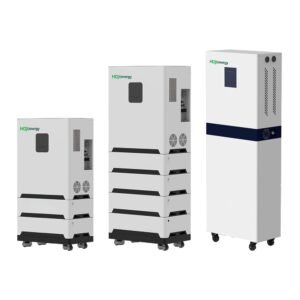
Ready to power up? If designing your own pack seems daunting, or if you need a certified, factory-tested solution for your business, HDX Energy is here to help. Explore our range of All-in-one Battery Energy systems today and let us handle the engineering for you.
Frequently Asked Questions (FAQ)
Q1: Can I mix old and new LiFePO4 cells in one battery pack? A: No, never mix cells of different ages, brands, or capacities. The “weakest link” effect will cause the older cells to reach full charge/discharge faster than the new ones, confusing the BMS and potentially causing the new cells to overwork, drastically reducing the pack’s lifespan.
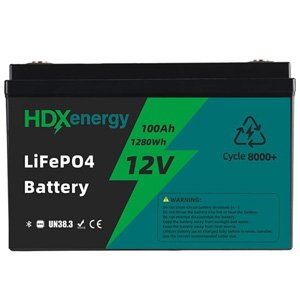
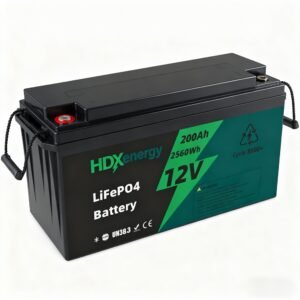
Q2: What is the ideal charging voltage for a 12V (4S) LiFePO4 battery? A: For a 12V nominal battery (which is actually 12.8V), the ideal bulk charging voltage is 14.2V to 14.6V. The float voltage should be set around 13.5V or 13.6V. You can find drop-in replacements in our 12V LiFePO4 Battery section.
Q3: Do I really need compression for my LiFePO4 cells? A: For small packs or low C-rate applications (like solar storage), it is beneficial but not strictly critical. However, for high-performance applications or large prismatic cells (280Ah+), applying 10-12 PSI of fixture compression is highly recommended to prevent internal delamination and ensure you get the rated 6000+ cycle life.
Q4: How does temperature affect LiFePO4 performance? A: LFP batteries love room temperature (20-25°C). While they can discharge safely down to -20°C, you must never charge them below freezing (0°C) without a heating element. Charging frozen lithium causes permanent plating on the anode, ruining the battery instantly. Many of our Portable Power Stations include built-in heating protection.
Q5: What size cable do I need for my battery pack? A: This depends on the current (Amps). As a rule of thumb for DC systems:
- 50A load: 6 AWG (13mm²)
- 100A load: 2 AWG (33mm²)
- 200A load: 2/0 AWG (67mm²) Always use high-quality pure copper welding cable for flexibility and conductivity.