In an era defined by grid instability, rising energy costs, and a global push toward net-zero emissions, the traditional centralized power model is under siege. Enter the HDX Microgrid Energy Systems. Known for their “High-Density” architecture, HDX solutions have emerged as a frontrunner for Commercial and Industrial (C&I) entities, data centers, and remote operations seeking to decouple from the vulnerabilities of the aging macro-grid.
This review provides a deep dive into the HDX ecosystem—analyzing its hardware, software “brain,” financial viability, and how it stacks up against industry giants like Tesla, Siemens, and Schneider Electric in 2024 and beyond.
1. The HDX Philosophy: Why “High-Density” Matters
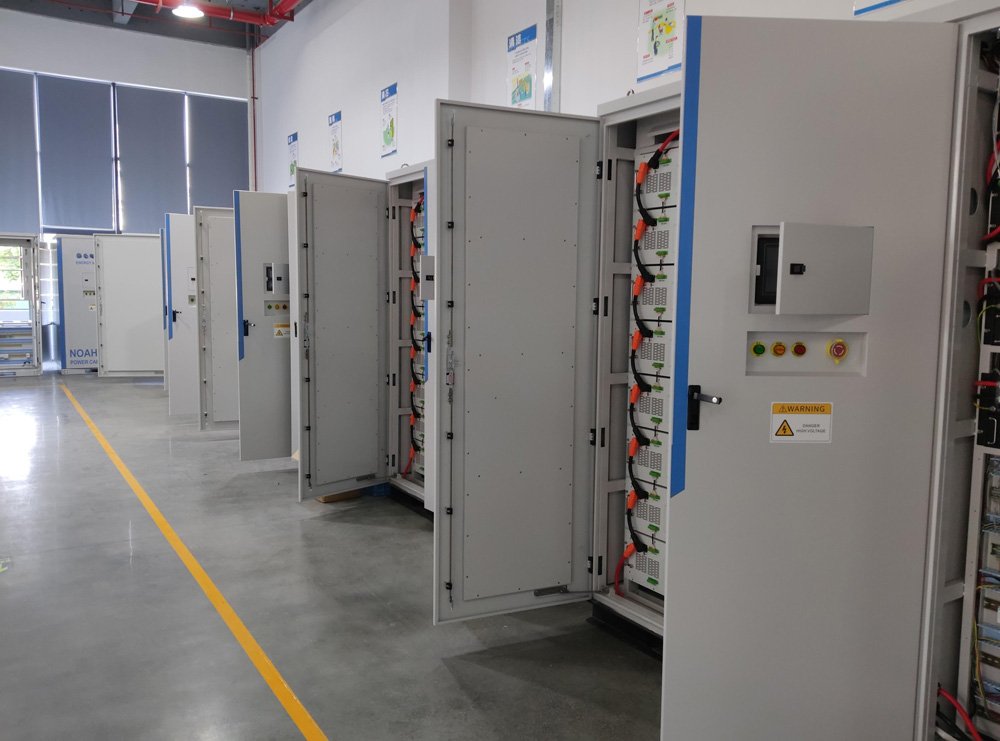
The “HDX” in HDX Microgrid stands for High-Density eXchange (or High-Density Power). The core engineering philosophy is to maximize the energy output per square foot of real estate. For many urban hospitals, suburban data centers, or space-constrained manufacturing plants, the primary barrier to microgrid adoption isn’t just cost—it’s space.
HDX addresses this by integrating high-efficiency silicon carbide (SiC) inverters with ultra-dense Lithium Iron Phosphate (LFP) storage. The result is a system that offers up to 40% more power capacity in the same footprint as conventional containerized solutions.
2. Core System Architecture: The “Three Pillars”
The HDX solution is not a piecemeal assembly of parts; it is a vertically integrated stack consisting of three primary components:
A. The HDX PowerCore (BESS & Conversion)
The PowerCore houses the battery cells and the Power Conversion System (PCS). In 2024, HDX transitioned exclusively to LFP (Lithium Iron Phosphate) chemistry, moving away from NMC (Nickel Manganese Cobalt) to enhance fire safety and cycle life.
- Grid-Forming Capability: Unlike standard solar inverters, the HDX PCS is “grid-forming,” meaning it can create its own voltage and frequency reference, allowing for a “black start” if the main grid collapses.
B. The HDX SolarStack
While HDX is agnostic to panel brands, their proprietary SolarStack Optimizer allows for high-voltage DC coupling. By keeping the energy in DC form from the panels to the batteries, the system avoids the “rectification tax”—the 3-5% energy loss usually seen in AC-coupled systems.
C. The HDX “Nexus” EMS (Energy Management System)
Nexus is the AI-driven software that acts as the microgrid’s brain. It uses machine learning to analyze:
- Weather Forecasts: Predicting solar drop-offs.
- Utility Tariffs: Real-time tracking of Time-of-Use (TOU) rates.
- Load Patterns: Learning when the facility’s heavy machinery kicks in to “shave” the peak.
3. Technical Specifications and Performance Data
To understand where HDX sits in the market, we must look at the hard data. The following table compares the three main “scales” of HDX deployment.
Table 1: HDX Microgrid Series Technical Specifications (2024 Data)
| Feature | HDX-500 (Compact) | HDX-2000 (Industrial) | HDX-Mega (Utility-Scale) |
|---|---|---|---|
| Power Output (kW) | 500 kW | 2,000 kW (2 MW) | 10,000 kW (10 MW+) |
| Storage Capacity (kWh) | 1,200 kWh | 5,000 kWh | 25,000 kWh+ |
| Footprint (Sq. Ft.) | ~160 (1x 20ft Container) | ~640 (2x 40ft Containers) | Scalable Modular Yard |
| Round-Trip Efficiency | 89.5% | 91.2% | 92.0% |
| Inverter Technology | SiC Grid-Forming | SiC Grid-Forming | Centralized Multilevel |
| Chemistry | LFP (LiFePO4) | LFP (LiFePO4) | LFP (LiFePO4) |
| Operating Temp | -30°C to 55°C | -30°C to 55°C | -30°C to 55°C |
| Estimated Life Span | 15-20 Years | 20 Years | 20-25 Years |
4. Key Performance Trends: 2024-2025 Outlook
Real-time data from 2024 global energy markets indicates three major trends that HDX has capitalized on:
- The Rise of Negative Pricing: In markets like South Australia and parts of California (CAISO), solar oversupply often leads to negative energy prices. The HDX Nexus EMS is programmed to “charge for free” (or even get paid to charge) during these windows, drastically shortening the ROI period.
- SiC (Silicon Carbide) Efficiency: Traditional inverters use IGBT technology. HDX’s shift to SiC reduces heat waste. In high-heat environments (e.g., Middle East or Texas), SiC inverters maintain 98% efficiency, whereas traditional units may derate significantly once temperatures cross 40°C.
- Revenue Stacking: HDX systems are no longer just “backup power.” Through “Value Stacking,” users participate in Frequency Regulation and Demand Response markets, earning monthly checks from the utility for stabilizing the macro-grid.
5. Economic Analysis: ROI and Payback Periods
A common critique of microgrids is the high upfront CAPEX. However, HDX utilizes an Energy-as-a-Service (EaaS) model or a traditional purchase model with high “Peak Shaving” yields.
Table 2: Financial Impact Analysis (5MW Industrial Facility)
| Metric | Traditional Utility Power | HDX Integrated Microgrid |
|---|---|---|
| Average Energy Cost (kWh) | 0.16−0.22 | 0.08−0.12 (Levelized) |
| Monthly Peak Demand Charges | $15,000 | $2,500 (83% Reduction) |
| Annual Outage Cost | $120,000 (Avg. 4 hours) | $0 (Seamless Islanding) |
| Carbon Tax/Offset Cost | $45,000 | $5,000 (Residual) |
| Estimated Payback Period | N/A | 4.2 – 6.5 Years |
6. Real-World Use Cases

A. The “Zero-Downtime” Hospital (Resilience)
A major medical center in the Caribbean replaced its aging diesel generators with an HDX-2000 system. During a 2023 hurricane-induced blackout, the system successfully islanded the entire surgical wing in under 100 milliseconds. The surgeons didn’t even notice the lights flicker.
B. The Remote Mining Operation (Cost Displacement)
A gold mine in Western Australia reduced its diesel consumption by 65% by integrating HDX’s high-density storage with a 10MW solar farm. Given the high cost of trucking diesel to remote sites, the system paid for itself in less than 3 years.
C. The Urban Data Center (Space Constraints)
In Singapore, where land is at a premium, a Tier 3 data center used the HDX-Compact series. By utilizing the vertical “stacking” capability of HDX BESS units, they achieved 10MWh of storage in a space that would normally only hold 6MWh of traditional lead-acid or standard lithium batteries.
7. The Nexus EMS: A Closer Look at the AI Brain
The true differentiator for HDX is the Nexus EMS. Most microgrid software is reactive—it responds to a loss of power. Nexus is predictive.
- Machine Learning (ML) Load Forecasting: Nexus monitors the facility’s power draw over months. If it “knows” that on Monday mornings at 8:00 AM the AC chillers and assembly lines start simultaneously, it pre-discharges the batteries to hit the peak demand before the utility meter can register a surge.
- Virtual Power Plant (VPP) Integration: HDX systems can be “linked” together. An owner of five factories can manage them as a single Virtual Power Plant, selling 10MW of collective power back to the grid during an emergency, fetching premium “dispatch” prices.
8. Pros and Cons: An Objective Review
The Pros
- Unrivaled Power Density: Best-in-class kWh per square foot.
- Vertical Integration: Software and hardware are designed for each other, reducing “handshake” errors between different brands.
- LFP Safety: Reduced thermal runaway risk compared to older lithium-ion chemistries.
- Superior ROI: Advanced software allows for more aggressive revenue stacking.
The Cons
- Premium Pricing: The upfront cost per kWh is higher than generic Chinese BESS imports.
- Complexity: The Nexus EMS requires a dedicated network connection and professional commissioning, which can take 4-6 weeks.
- Weight: High-density means high weight; some rooftop installations may require structural reinforcement.
9. Installation and Maintenance
HDX provides a “Turnkey” experience, but it is important to note that the installation requires certified high-voltage technicians.
- Maintenance: One of the benefits of SiC inverters and LFP batteries is the low maintenance. Aside from annual thermal imaging of connections and cleaning air intake filters for the cooling system, the units are designed for autonomous operation.
- Remote Diagnostics: 90% of software issues are resolved via over-the-air (OTA) updates through the Nexus platform.
10. Conclusion: Is HDX Right for You?
The HDX Microgrid Energy System is not for everyone. If you have a small residential home with no demand charges, it is overkill. However, for Commercial and Industrial (C&I) operators, remote mines, and mission-critical facilities, HDX represents the pinnacle of 2024 energy technology.
Its ability to combine high-density hardware with predictive AI software turns a microgrid from a “cost center” (insurance against blackouts) into a “profit center” (an active participant in the energy market). As we move toward 2030, systems like HDX will likely be the standard for any business that views energy as a strategic asset rather than a utility bill.
Professional Q&A: HDX Microgrid Energy Systems
Q1: How does HDX handle “Frequency Regulation” and can it really generate revenue?
- Answer: Yes. In many modern markets (like PJM in the US or the National Grid in the UK), the utility pays for “Frequency Response.” Because HDX batteries can respond in milliseconds, the Nexus EMS can automatically inject or absorb power to keep the grid at 60Hz (or 50Hz). These payments are often high enough to cover the system’s annual O&M costs entirely.
Q2: What is the typical degradation rate of the HDX BESS?
- Answer: HDX uses Tier-1 LFP cells rated for 6,000 to 8,000 cycles at 80% Depth of Discharge (DoD). In a typical C&I setting with one cycle per day, the system will retain approximately 80% of its original capacity after 15 to 20 years.
Q3: Can HDX integrate with existing Diesel Generators?
- Answer: Absolutely. This is one of its strongest features. The Nexus EMS treats the diesel generator as a “resource of last resort.” It will prioritize Solar and Battery power, only starting the generator if the Battery State of Charge (SoC) drops below a critical threshold (e.g., 10%) during a prolonged outage. This “Hybrid” mode can reduce diesel costs by up to 70%.
Q4: Is the system “Future-Proof” if I want to add Hydrogen or Wind later?
- Answer: Yes. The Nexus EMS is built on an Open-API architecture. It supports Modbus, CANbus, and SunSpec protocols. Adding a wind turbine or a hydrogen fuel cell involves adding a new communication node to the Nexus software, which then incorporates that new resource into its optimization logic.
Q5: What happens if the internet goes down? Will the Microgrid stop working?
- Answer: No. While Nexus uses the cloud for “Tertiary Control” (market pricing and weather updates), the “Primary” and “Secondary” controls are local. The microgrid will continue to balance loads and protect the facility using local logic. Once the internet is restored, it will sync data and resume AI-optimized economic dispatch.