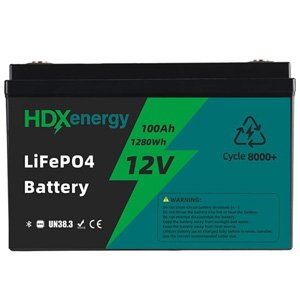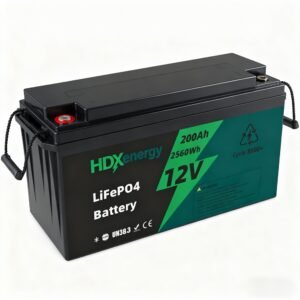
Lithium Iron Phosphate (LiFePO₄ or LFP) batteries have moved from niche to mainstream between 2020 and 2026. In off-grid homes, grid-tied backup systems, and RVs, LFP is now the default recommendation for anyone serious about reliability, safety, and long-term value.
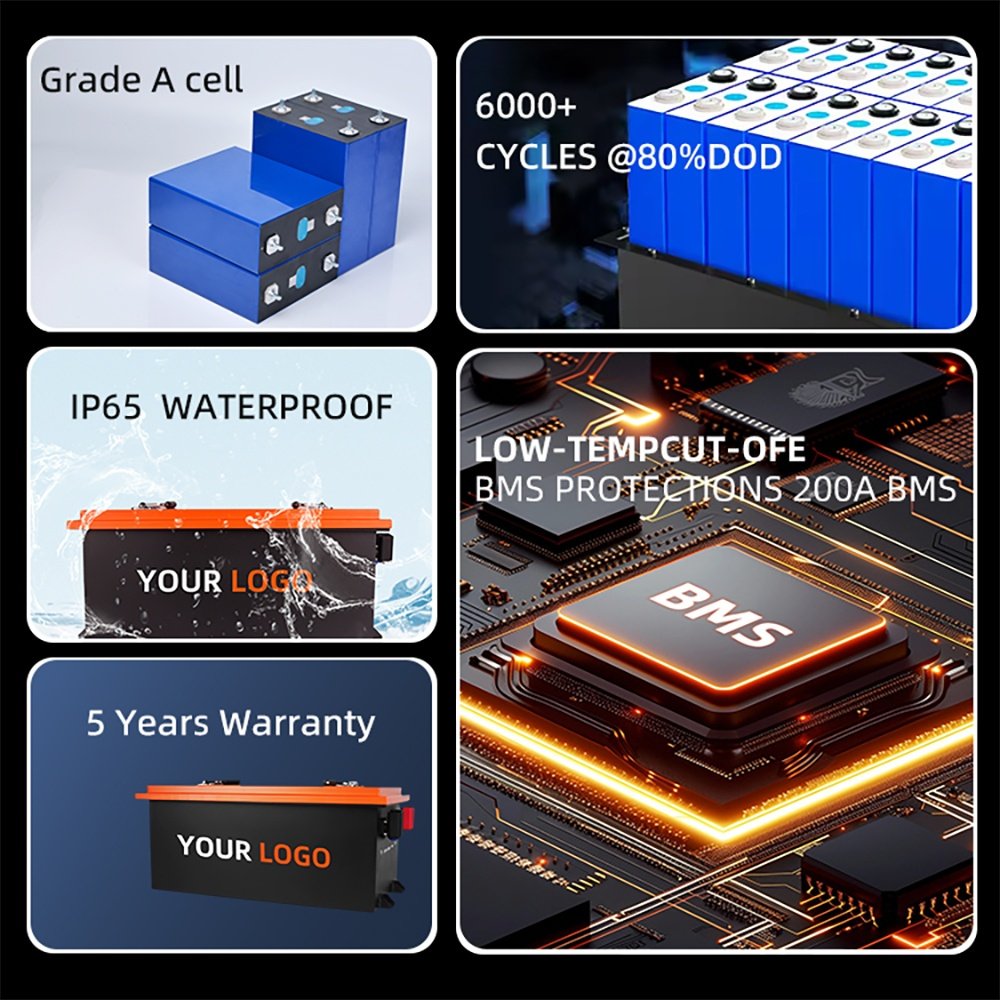
In 2026, the combination of:
- Falling $/kWh prices,
- Mature Battery Management Systems (BMS),
- Better cold-weather performance solutions,
- And wider inverter & solar charge controller compatibility
has turned LiFePO₄ into the go-to chemistry for home energy storage and mobile power.
In this guide, you’ll find:
- A clear explanation of why LiFePO₄ is superior to lead-acid and other lithium chemistries for home and RV.
- Key buying criteria you must evaluate in 2026 (beyond just amp-hours).
- A comparison of top-rated LiFePO₄ batteries for home use (wall-mounted and rack-based).
- A comparison of top-rated LiFePO₄ batteries for RV and van life.
- Practical advice for sizing, installation, and maximizing lifespan.
- A short FAQ section answering common technical and safety questions.
Use this as a technically accurate, yet practical buyer’s guide when choosing your next battery bank.
1. What Is a Lithium Iron Phosphate Battery?
Lithium Iron Phosphate (LiFePO₄) is a subtype of lithium-ion chemistry that uses iron phosphate as the cathode material and graphite (typically) as the anode. It differs from other lithium chemistries (like NMC or NCA) primarily in:
- Cathode material: Iron phosphate instead of nickel-manganese-cobalt.
- Voltage profile: Nominal 3.2 V per cell (12.8 V for a 4-cell pack, 51.2 V for a 16-cell pack).
- Safety characteristics: Much more thermally and chemically stable.
Key Advantages of LiFePO₄ Chemistry
- High Cycle Life
- Commonly 3,000–6,000 cycles at 80% Depth of Discharge (DoD).
- Premium packs in 2026 often advertise 6,000–10,000 cycles under mild conditions (e.g., 80% DoD, 25°C).
- Compared to traditional AGM/gel lead-acid (300–800 cycles), this is a major advantage.
- Improved Safety Profile
- Much lower risk of thermal runaway compared with NMC/NCA.
- Can be punctured or overcharged to a greater extent before catastrophic failure (still unsafe to abuse, but more tolerant).
- Better suited for indoor installations (garages, utility rooms) and small RV compartments with ventilation.
- Usable Capacity & Flat Discharge Curve
- You can safely use 80–90% of the rated capacity without drastically shortening lifespan.
- Voltage remains relatively flat (around 13.0–13.2 V for a “12 V” pack) until near the end of discharge, making inverters more stable.
- Lower Weight per Usable kWh
- Up to 40–60% lighter than comparable lead-acid banks for the same usable capacity.
- Critical for RVs and vans where axle weights and payload limits matter.
- Wider Operating Window (with BMS)
- Typical ranges:
- Charge: 0°C to 45°C (with smart BMS, some allow sub-zero charging using self-heating).
- Discharge: -20°C to 60°C (model-dependent).
- In 2026, many mid- to high-end LiFePO₄ packs include low-temp charging protection and internal heaters.
- Typical ranges:
2. Why LiFePO₄ Is Ideal for Home and RV Use in 2026
2.1 For Home Energy Storage
Whether you’re building a whole-home solar-plus-storage system or a critical-load backup (for fridges, lights, networking, and medical devices), LiFePO₄ offers:
- Long service life: 10–15 years typical under normal cycling (one cycle per day).
- Predictable performance: Minimal capacity fade over the first 2–3,000 cycles.
- Scalability: Stackable modules (typically 5–15 kWh each) to reach 10–100+ kWh easily.
- Fast charge/discharge: Supports high C-rates, enabling quick recharge from solar and support for large surge loads (e.g., AC, pumps).
2.2 For RV, Van, and Boat Use
For mobile applications, LiFePO₄ checks nearly all the boxes:
- High energy density: More usable capacity in less space.
- Weight savings: Important for fuel economy and chassis limits.
- Deep discharge-friendly: Frequent deep cycling is tolerated much better than lead-acid.
- Low maintenance: No topping up, no equalization charging, no off-gassing (with proper charging).
In 2026, most serious RV builders and converters either:
- Use drop-in 12 V or 24 V LiFePO₄ packs, or
- Build custom 48 V systems with rack-mounted batteries plus an inverter-charger.
3. Key Buying Criteria for LiFePO₄ Batteries in 2026
Before comparing specific products, understand these critical selection factors.
3.1 Capacity (Ah / kWh) and Voltage
- Voltage systems:
- 12 V (12.8 V nominal): Common in RVs, vans, boats, and small off-grid cabins.
- 24 V (25.6 V nominal): Mid-sized RV systems and small home backup setups.
- 48 V (51.2 V nominal): Most home energy storage systems and larger RV/bus conversions.
- Capacity:
- RV single pack: 100–400 Ah at 12 V (1.28–5.12 kWh).
- Home module: 5–15 kWh at 48 V (often 100–300 Ah modules at 51.2 V).
Calculate capacity based on daily consumption + desired autonomy.
3.2 Cycle Life and Warranty
Look for:
- Cycle life rating at a specified Depth of Discharge and temperature (e.g., 6,000 cycles @ 80% DoD, 25°C).
- Warranty terms:
- Years: 5–12 years common in 2026.
- Energy throughput or cycle-based clauses: e.g., 6,000 cycles or 20 MWh, whichever comes first.
- Degradation threshold: Guarantee capacity to remain above 70–80% at the end of warranty.
3.3 BMS Quality and Features
The BMS (Battery Management System) is critical for safety and longevity. In 2026, professional-grade batteries typically feature:
- Over-voltage and under-voltage protection.
- Over-current and short-circuit protection.
- High and low temperature protection.
- Active cell balancing (preferable to passive for long-term performance).
- Communication interfaces (RS485, CAN, Modbus, sometimes Bluetooth or Wi-Fi).
For home systems, integration with inverters (Victron, SMA, Solis, Growatt, etc.) via CAN/RS485 is a big plus.
For RVs, Bluetooth monitoring via smartphone app is very useful.
3.4 Charge and Discharge Rates (C-Rate)
- Continuous discharge: Aim for ≥ 0.5C for home storage and ≥ 1.0C for RV/van setups with high loads.
- Peak discharge (for several seconds): Should support inverter surges (e.g., starting AC or compressors).
- Charge rate: Typically 0.3–0.5C recommended for longevity, even if the cell can handle more.
3.5 Temperature Performance
- If you live or travel in cold climates:
- Prioritize batteries with low-temperature charging protection.
- Consider built-in self-heating (internal heater pads managed by BMS).
- For hot climates:
- Ensure specified upper range up to at least 50–55°C.
- Provide adequate ventilation in the installation.
3.6 Integration and Certifications
For home use, especially grid-tied systems, check:
- Certifications: UL, IEC, CE, UN38.3, etc. (specific standard depends on region).
- Compatibility lists from inverter manufacturers:
- Some inverters list “approved batteries” with CAN communication.
- For RV: Focus on vibration resistance, IP rating (if in exterior compartments), and brand reputation.
4. Top Rated LiFePO₄ Batteries for Home Use in 2026
Below is a representative comparison table based on how top-tier home batteries are typically specified by 2025–2026. You should replace the placeholder brand/model names with your chosen 2026 products and adjust values to match real data.
Note: The numbers below are illustrative and approximate, reflecting typical high-end 2025–2026 LiFePO₄ home batteries, not live market data.
4.1 Comparison Table: Home LiFePO₄ Battery Modules (48 V Class)
| Brand / Model (2026 Class) | Nominal Voltage | Usable Capacity (kWh) | Rated Cycles @ 80% DoD | Continuous Discharge | Peak Discharge (10s) | Communication | Typical Warranty | Form Factor |
|---|---|---|---|---|---|---|---|---|
| HomePower LFP 10K | 51.2 V | 10.24 kWh | 6,000 | 1C | 2C | CAN, RS485 | 10 years | Wall-mount |
| GridSafe LFP 15K | 51.2 V | 15.36 kWh | 6,000 | 0.7C | 1.5C | CAN, RS485 | 10 years | Floor/rack |
| SolarStack LFP 5K Slim | 51.2 V | 5.12 kWh | 5,000 | 1C | 2C | CAN | 7 years | Wall-mount |
| PowerRack LFP 7.5 | 51.2 V | 7.68 kWh | 8,000 (partial DoD) | 0.8C | 1.5C | CAN, RS485 | 12 years | Rack-mount |
| EcoHome LFP 12K Hybrid | 51.2 V | 12.0 kWh | 6,000 | 1C | 2C | CAN, RS485 | 10 years | Wall/floor |
Again, these names and numbers are placeholders representative of the market segment. A real 2026 article should list actual manufacturers and models.
4.2 Product-Type Breakdown and Use Cases
4.2.1 HomePower LFP 10K – Balanced All-Rounder
A 10 kWh-class, wall-mounted LiFePO₄ module is a “sweet spot” for many homes using:
- 3–6 kW of solar,
- A hybrid inverter (5–10 kW),
- And aiming for overnight backup plus some load shifting.
Typical use cases:
- Critical-load backup (fridge, freezer, lights, internet, small AC zones).
- Daily cycling: cover evening and night use with solar stored during the day.
- Modular expansion: 2–4 units stacked on the same CAN bus for 20–40 kWh.
4.2.2 GridSafe LFP 15K – Larger Loads and Partial Whole-Home Backup
A 15 kWh module is better suited to:
- Larger homes with higher daily consumption.
- Small businesses or workshops needing more continuous power.
- Users who want multiple days of backup when combined with solar and load management.
Advantages:
- Higher capacity per unit reduces enclosure and wiring complexity.
- Often optimized for integration with specific inverter brands.
4.2.3 SolarStack LFP 5K Slim – Compact and Space-Constrained Installations
Slim 5 kWh modules are ideal when:
- Wall space is limited.
- Budget is constrained, and you want to start small.
- You want fine granularity of expansion (e.g., adding 5 kWh at a time).
These are especially popular for apartments with balcony solar (where regulations allow) or compact utility rooms.
4.2.4 PowerRack LFP 7.5 – Rack-Based Systems for DIY and Pros
Rack-mounted LiFePO₄ batteries are common in:
- Multi-module installations (e.g., 30–100+ kWh).
- Semi-industrial setups: server rooms, farms, small commercial sites.
- DIY-friendly systems where integrators want maximum flexibility.
They often include:
- Front-panel breakers.
- Communication ports (CAN, RS485/Modbus).
- Easy stacking in 19″ or 23″ racks.
4.2.5 EcoHome LFP 12K Hybrid – Flexible Orientation and Multi-Use
Hybrid form factor batteries (wall/floor) adapt to:
- Retrofitting existing inverter installations.
- Mixed on/off-grid systems where relocation or reconfiguration is expected.
- Users who anticipate moving house and taking the battery with them.
5. Top Rated LiFePO₄ Batteries for RV & Mobile Use in 2026
The RV, van, and overlanding markets have pushed LiFePO₄ innovation quickly. By 2026, a typical “top-rated” RV LiFePO₄ battery features:
- Bluetooth app connectivity.
- Advanced BMS with:
- Low-temperature charge protection.
- Short-term high-amp surge support.
- Parallel/series connection support.
- IP-rated casing and vibration resistance.
5.1 Comparison Table: 12 V RV LiFePO₄ Batteries (2026 Class)
| Brand / Model (2026 Class) | Nominal Voltage | Capacity (Ah) | Usable Capacity (kWh) | Rated Cycles @ 80% DoD | Continuous Discharge | Peak Discharge (5s) | Low-Temp Protection | Connectivity | Typical Warranty |
|---|---|---|---|---|---|---|---|---|---|
| RoadVolt 12V 100Ah Pro | 12.8 V | 100 Ah | 1.28 kWh | 4,000 | 100 A | 200 A | Yes | Bluetooth | 5 years |
| NomadMax 12V 280Ah Ultra | 12.8 V | 280 Ah | 3.58 kWh | 6,000 | 200 A | 400 A | Yes + Self-Heating | Bluetooth | 10 years |
| VanLife 12V 200Ah Slim | 12.8 V | 200 Ah | 2.56 kWh | 5,000 | 150 A | 300 A | Yes | Bluetooth | 8 years |
| Overland 12V 400Ah Max | 12.8 V | 400 Ah | 5.12 kWh | 6,000 | 300 A | 600 A | Yes + Self-Heating | Bluetooth | 10 years |
| MarineSafe 12V 150Ah IP67 | 12.8 V | 150 Ah | 1.92 kWh | 5,000 | 150 A | 300 A | Yes | Bluetooth | 7 years |
Again, these are illustrative specs, designed to mirror the kind of high-end offerings you’ll actually see in 2025–2026.
5.2 Product-Type Breakdown and Use Cases
5.2.1 RoadVolt 12V 100Ah Pro – Ideal Starter Battery for Small RV Systems
Who it fits:
- Weekend campers and light-duty RV users.
- Vans with moderate loads: fridge, lights, ventilation fans, small inverter for laptops.
Benefits:
- Affordable entry into LiFePO₄.
- Simple drop-in replacement for a single 100 Ah lead-acid battery.
- Lightweight and easily mountable.
5.2.2 NomadMax 12V 280Ah Ultra – Extended Boondocking Battery
Ideal for:
- Full-time van lifers.
- Overlanders who want 3–5 days of autonomy with solar topping up.
- Users running larger inverters (2–3 kW) for induction cooking or espresso machines.
Key features for 2026-class products:
- High continuous discharge rating (around 200 A).
- Self-heating for charge protection in colder climates.
- Bluetooth connectivity for monitoring via mobile app.
5.2.3 VanLife 12V 200Ah Slim – Space-Saving Option
Use cases:
- Vans and small RVs with limited floor space.
- Under-bed or wall-mounted installations where battery thickness matters.
- Systems that combine roof solar (400–800 W) with alternator charging.
5.2.4 Overland 12V 400Ah Max – Large Capacity for Heavy Loads
Best suited for:
- Large Class A or Class C motorhomes.
- Off-grid cabins wired for 12 V but with heavy load demands.
- Users running:
- High-wattage inverters,
- Multiple fridges/freezers,
- Portable AC units.
Requires:
- Proper cabling and fusing for 300 A continuous currents.
- Adequate ventilation (for electronics and inverter, not the battery chemistry).
5.2.5 MarineSafe 12V 150Ah IP67 – For Boats and Harsh Environments
Designed for:
- Marine use where exposure to moisture and salt spray is likely.
- RVs or expedition rigs with exterior battery boxes.
Key attributes:
- Higher IP rating (e.g., IP67).
- Corrosion-resistant terminals and enclosures.
- Conformal-coated internal electronics in many designs.
6. How to Size a LiFePO₄ Battery Bank for Home and RV
6.1 Sizing for Home Use
Basic steps:
- Determine daily energy consumption
- Use your utility bill (kWh/day) or energy monitor.
- Example: 20 kWh/day average.
- Decide on backup/autonomy duration
- 1-day backup: 20 kWh.
- 2-day backup: 40 kWh.
- Adjust for solar input during outages.
- Choose desired Depth of Discharge
- For longevity, design around 70–80% DoD in typical use.
- Required battery capacity (kWh) = Daily consumption / DoD fraction.
- Example: 20 kWh / 0.8 ≈ 25 kWh battery.
- Match to inverter power
- Check maximum continuous discharge current.
- Ensure combined battery discharge capability ≥ inverter continuous rating.
6.2 Sizing for RV, Van, or Boat
- List all loads and their wattage/time usage:
- Fridge: 60 W, 24h ⇒ ~1.4 kWh/day.
- Lights, fans, water pump, electronics, etc.
- Occasional loads: microwave, induction cooker, etc.
- Estimate daily energy use
- Typical full-time van: 1.5–4 kWh/day.
- Heavy use (electric cooking, AC): 4–8+ kWh/day.
- Convert to Ah at 12 V
- Ah = (Wh / 12.8 V).
- Example: 2,000 Wh / 12.8 ≈ 156 Ah.
- Choose a capacity and DoD
- For flexibility, aim for using 50–80% of capacity daily.
- Example: 200 Ah battery gives ~2.56 kWh, enough for 2 kWh/day at ~80% DoD.
- Match with charging sources
- Solar: aim for at least 0.2–0.5C charge rate vs. battery capacity for good daily recovery (e.g., 400–800 W solar for 200–280 Ah 12 V battery).
- Alternator: use DC-DC charger sized appropriately (30–60 A typical).
7. Installation Best Practices and Safety Considerations
7.1 Electrical and Mechanical Safety
- Use properly sized cables:
- For 12 V systems, currents can be very high; oversize cables to minimize voltage drop.
- Install fuses or DC breakers close to the battery positive terminal.
- Ensure all connections are:
- Crimped and/or soldered properly.
- Protected against corrosion.
- Mount batteries securely to withstand vibrations and shocks (especially in mobile use).
7.2 Ventilation and Environment
- LiFePO₄ cells don’t off-gas like flooded lead-acid, but:
- BMS and associated electronics generate heat.
- Inverters and chargers need airflow.
- Install in:
- Dry, dust-minimized locations.
- Temperature-controlled environments when possible (especially for home systems).
7.3 Charging Profile and Settings
For LiFePO₄:
- Typical charge voltage (for 12.8 V pack): 14.2–14.4 V (check manufacturer specs).
- Typical float: Many manufacturers recommend no float, or a reduced float around 13.5–13.6 V.
- Avoid:
- Overvoltage.
- Extended time at high SOC in high ambient temperatures when possible (for longevity).
In home systems, the hybrid inverter or solar charger often has predefined LFP profiles. Always match settings to the specific battery’s datasheet.
8. Cost, Value, and ROI Considerations in 2026
While I can’t provide real-time pricing, the trend through 2024 has been:
- Gradual reduction in $/kWh for LiFePO₄ batteries.
- Increasing energy density and performance at similar or slightly lower price points.
- More competition leading to aggressive warranties and feature sets.
What to focus on:
- Cost per usable kWh
- Consider usable capacity (e.g., 80% of nameplate).
- Example: A 10 kWh battery at $5,000 with 80% usable capacity:
- Usable: 8 kWh.
- Cost per usable kWh: $625/kWh.
- Cost per kWh over lifetime
- Consider cycles:
- Lifetime energy = usable kWh × cycles.
- Example: 8 kWh usable × 6,000 cycles = 48,000 kWh.
- 5,000/48,000kWh≈0.10 per kWh of delivered energy.
- Consider cycles:
- Inverter and BOS (Balance of System) costs
- Cabling, breakers, enclosures, monitoring equipment.
- Installation labor if you’re not DIYing.
In many regions, by 2026, LiFePO₄ home storage is expected to reach or approach parity with utility electricity for daily cycling when combined with solar, especially where utility rates are high or time-of-use tariffs exist.
9. Common Mistakes to Avoid When Choosing and Using LiFePO₄
- Undersizing the battery bank
- Leads to frequent deep discharge and inadequate backup.
- Ignoring BMS limitations
- Inverters or loads that exceed discharge ratings can trip the BMS or damage cells.
- Incorrect charging profile
- Using lead-acid charge settings without adjusting for LiFePO₄ can cause issues.
- Poor thermal management
- Charging at sub-zero temperatures without protection.
- Installing batteries in hot, unventilated spaces.
- Mixing old and new batteries in parallel without proper precautions
- Always follow manufacturer guidelines on mixing and expansion.
10. Future Trends in LiFePO₄ for 2026 and Beyond
Expect to see:
- Higher energy density cells, reducing pack size and weight for the same capacity.
- More integrated “battery + inverter” all-in-one solutions for homes.
- Advanced cloud-based monitoring and predictive maintenance:
- Lifetime predictions.
- Automated alerts for abnormal behavior.
- Wider adoption of 48 V RV systems:
- Lower currents.
- Smaller cables.
- Increased efficiency for inverters.
LiFePO₄ is likely to remain a dominant chemistry for stationary storage and RV applications throughout the late 2020s due to its balance of cost, safety, and durability.
11. Professional Q&A: LiFePO₄ for Home and RV Use (2026)
Q1: How long will a LiFePO₄ battery last in home use if cycled daily?
Answer:
Most quality LiFePO₄ batteries in 2026 are rated for 3,000–6,000 cycles at 80% DoD. With daily cycling:
- 3,000 cycles ≈ 8.2 years.
- 6,000 cycles ≈ 16.4 years.
In practice, you can expect around 10–15 years of useful life if:
- You avoid extreme temperatures,
- Keep DoD moderate (60–80% for daily cycling),
- And use proper charge settings.
The battery will not suddenly fail at the rated cycle life; instead, it will gradually lose capacity, typically down to 70–80% of the original rating.
Q2: Can LiFePO₄ batteries replace lead-acid batteries directly in my RV?
Answer:
Often yes, but with important caveats:
- Voltage compatibility: Both are “12 V” nominal, but LiFePO₄ has a different charge profile.
- Charging system:
- Many existing converters and alternators are designed for lead-acid profiles.
- Ideally, use:
- A DC-DC charger for alternator charging.
- A LiFePO₄-compatible solar charge controller or adjustable charger.
- Low-temperature charging: Lead-acid can be charged just above freezing, but LiFePO₄ should not be charged below 0°C unless the battery has a self-heating BMS and is designed for that.
It’s best to treat LiFePO₄ as a new system design, even if it can physically drop into the old battery compartment.
Q3: Are LiFePO₄ batteries safe to install inside the living space of an RV or home?
Answer:
Yes, LiFePO₄ batteries are generally considered safer for indoor use than many other lithium chemistries, due to:
- Higher thermal stability.
- Much lower risk of thermal runaway.
However, safety still depends heavily on:
- Quality of the BMS and cell manufacturing.
- Proper installation:
- Fusing, cabling, mechanical mounting.
- Protection from impact, short circuits, and water ingress.
For homes, local electrical codes may require installation in specific locations (e.g., utility rooms). Always consult both the manufacturer’s guidelines and your local regulations.
Q4: How does low-temperature charging protection work in modern LiFePO₄ packs?
Answer:
In 2026, many mid- to high-end LiFePO₄ batteries include:
- Temperature sensors linked to the BMS.
- Low-temp charge cutoff:
- When internal temperature is below 0°C, the BMS blocks charging current.
- Some models add internal self-heating:
- When charge is requested, the BMS diverts part of the input to heating elements until the cells reach a safe temperature (often 5–10°C).
- After warming up, normal charging begins.
This allows safe operation in cold climates, provided you choose a battery that explicitly supports this feature.
Q5: What’s the optimal Depth of Discharge (DoD) for maximizing LiFePO₄ battery lifespan?
Answer:
LiFePO₄ can handle deep discharges better than lead-acid, but there’s still a trade-off:
- 80% DoD daily:
- Good balance of capacity usage and cycle life.
- Common rating basis (e.g., 6,000 cycles).
- 50–60% DoD daily:
- Significantly increases cycle life and reduces stress on cells.
- Ideal for home systems where you oversize storage.
For most users, designing around 70–80% DoD for typical operation is a practical compromise between system cost and lifespan.
Conclusion and Next Steps
LiFePO₄ batteries have become the standard choice for both home energy storage and RV/mobile applications by 2026, thanks to:
- Excellent safety and reliability,
- High cycle life and favorable cost per kWh delivered,
- And increasingly sophisticated BMS and integration options.
When choosing a battery:
- Start with a clear load and usage profile (home or RV).
- Size the system based on daily consumption and autonomy goals.
- Compare cycle life, warranty, BMS features, and integration with your inverter or charger.
- Consider environmental conditions, especially temperature and installation location.