Investing in a Hybrid Solar Power System is perhaps the most sophisticated energy decision a modern homeowner or business owner can make. Unlike a standard “On-Grid” system that simply feeds the utility, or an “Off-Grid” system that isolates you, a Hybrid system is a dynamic, multi-directional energy hub. It manages high-voltage DC from panels, chemical storage in batteries, and bi-directional AC flow from the grid.
However, complexity demands care. To ensure your system doesn’t just “function” but actually thrives over its 25-year expected lifespan, you need a rigorous maintenance protocol. This guide moves beyond simple cleaning into the realms of thermal management, firmware optimization, and chemical preservation.
Part 1: The Solar Array – The Engine Room
The photovoltaic (PV) modules are the “fuel intake” of your system. While they have no moving parts, they are subjected to the most brutal environmental stressors: UV radiation, thermal expansion, and abrasive particulate matter.
1.1 The Science of Photovoltaic Degradation
Every solar panel undergoes LID (Light Induced Degradation) and LeTID (Light and elevated Temperature Induced Degradation). While you cannot stop this completely, poor maintenance accelerates it.
- Micro-cracks: Often caused by walking on panels during cleaning or extreme hail. These cracks are invisible to the naked eye but show up as “dead zones” in thermal imaging.
- Delamination: If moisture enters the EVA (ethylene-vinyl acetate) layer, the panel will begin to peel internally. Regular visual inspections for “clouding” at the edges of the glass are vital.
1.2 Advanced Cleaning Protocols
In 2026, we’ve moved past the “garden hose” era.
- Ionized Water: Professional cleaners now use de-ionized water. Tap water contains minerals (calcium, magnesium) that leave a “limescale” film, which can reduce efficiency by 2-3% over time.
- The “No-Soap” Rule: Never use abrasive detergents. They can strip the Anti-Reflective Coating (ARC) off the glass, leading to higher reflectance and lower absorption.
| Cleaning Variable | Impact on Efficiency | Recommendation |
| Light Dust | 2% – 5% Loss | Rain-wash is usually sufficient. |
| Bird Droppings | 10% – 30% Loss (Per Panel) | Immediate spot cleaning required to prevent hotspots. |
| Pollen/Biofilm | 5% – 12% Loss | Bi-annual scrub with soft-bristle brush. |
| Heavy Snow | 100% Loss | Use a specialized “solar rake” to avoid scratching glass. |
Part 2: The Hybrid Inverter – The Digital Brain
The hybrid inverter is a high-frequency power electronics device. It is essentially a specialized computer that handles massive amounts of current. It is the most likely component to fail within the first 10-12 years if not maintained.
2.1 Thermal Management and Airflow
Inverters convert DC to AC via high-speed switching transistors (IGBTs). This process generates heat.
- Capacitor Health: Heat is the silent killer of electrolytic capacitors. For every 10°C increase in operating temperature above its rating, the life of a capacitor is halved.
- Fan Verification: Many 5kW+ hybrid inverters have active cooling. Ensure the fans aren’t clogged with spider webs or dust. If the fan sounds “gritty,” it needs replacement before the inverter throttles its power output to stay cool.
2.2 Firmware: The Invisible Maintenance
In the modern era, “maintenance” includes software. Manufacturers like Tesla, Huawei, and Sungrow frequently release firmware updates that:
- Optimize MPPT Algorithms: Improving how the system finds the “sweet spot” of power during cloudy days.
- BMS Communication: Improving how the inverter talks to the battery to prevent overcharging.
- Grid Compliance: Adjusting to new utility regulations regarding voltage surges.
Part 3: Battery Energy Storage Systems (BESS) – The Chemical Vault
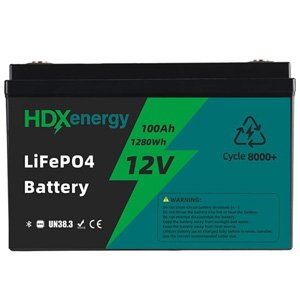
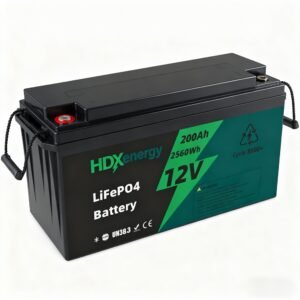
In a hybrid system, the battery is your “energy bank account.” Most systems today use Lithium Iron Phosphate (LiFePO4) due to its safety and longevity.
3.1 Managing the State of Charge (SoC)
To maximize the “Cycle Life” (the number of times you can charge/discharge), you must manage the SoC window.
- Avoid the Edges: Running a battery from 100% to 0% is stressful. A “Maintenance Window” of 10% to 90% can increase the total lifetime throughput of energy by up to 25%.
- Calibration Cycles: Once every 3 months, it is actually beneficial to charge the battery to 100% and let it sit. This allows the BMS to “balance” the individual cells, ensuring they all have the same voltage.
3.2 Environmental Stability
Batteries are sensitive to “Thermal Runaway” (though LiFePO4 is very stable).
- Winter Care: Batteries cannot be charged below 0°C (32°F) without damaging the lithium plating. Ensure your battery enclosure is insulated or has an internal heater if you live in a cold climate.
- Summer Care: High heat speeds up the chemical degradation. If your battery is in a shed, consider a small solar-powered extraction fan to keep the ambient temperature below 30°C.
| Battery Parameter | Optimal Range | Warning Sign |
| Ambient Temp | 15°C – 25°C | Continuous operation > 40°C |
| Cell Voltage Delta | < 0.05V difference | Delta > 0.15V (Unbalanced cells) |
| Discharge Rate | 0.5C (half of capacity) | Constant 1C discharge (High stress) |
| Resistance | Low / Consistent | Rising internal resistance (Aging) |
Part 4: Electrical Infrastructure and Safety Hardware
A hybrid system involves high-voltage DC (up to 600V-1000V) and 230V/240V AC. Maintenance of the “dumb” components—wires and breakers—is just as important as the “smart” ones.
4.1 DC Isolators and Junction Boxes
DC current is prone to “arcing.” If a connection is slightly loose, the electricity will jump the gap, creating a 3,000°C plasma arc that starts fires.
- Torque Testing: Every year, a technician should check that all screw terminals are tightened to the manufacturer’s specified Newton-meters (Nm).
- Moisture Ingress: Check conduit entries. If the “solar-rated” sealant has cracked, water can wick into the inverter’s DC terminals, causing catastrophic short circuits.
4.2 Surge Protection Devices (SPD)
Your hybrid system is a giant lightning rod.
- SPD Check: Most modern systems have SPD modules with a small “window.” If the window is green, it’s good. If it’s red, the device has sacrificed itself to save your inverter from a nearby strike and must be replaced immediately.
Part 5: Data Logging and Performance Analytics
If you can’t measure it, you can’t manage it. Maintenance in 2026 is data-driven.
5.1 Identifying “Shading Parasites”
Over years, trees grow. A branch that didn’t shade your panels three years ago might now be casting a “soft shadow” for two hours a day. Because hybrid systems often use string inverters, one shaded panel can drop the output of the entire string by 50%.
- Action: Review your monthly generation reports. If you see a dip in the “10 AM to 12 PM” slot compared to last year’s data, check for new foliage growth.
5.2 Efficiency Calculations
You should calculate your Performance Ratio (PR) annually.
$$PR = \frac{\text{Actual Yield (kWh)}}{\text{Theoretical Yield (based on sun hours)}}$$
A well-maintained hybrid system should have a PR of 0.80 to 0.85. If your PR drops below 0.75, you have a maintenance issue (soiling, hardware degradation, or wiring losses).
Part 6: Seasonal Maintenance Checklist
| Season | Focus Area | Key Task |
| Spring | Post-Winter Audit | Check for roof leaks and debris under the panels. |
| Summer | Thermal Management | Clean inverter heat sinks; check battery room ventilation. |
| Autumn | Debris Removal | Clear fallen leaves from panel surfaces and gutters. |
| Winter | Load Management | Adjust “Backup Reserve” % higher to prepare for storms. |
Professional Q&A: Expert Insights
Q: Why is my hybrid system’s “Self-Consumption” rate dropping over time?
A: This is usually due to a shift in household behavior or battery degradation. As batteries age, their internal resistance increases, meaning more energy is lost as heat during charging. However, check your “Phantom Loads” first—new appliances or old “vampire” electronics might be draining your stored energy before you can use it for your primary needs.
Q: Can I use a pressure washer to clean my panels?
A: Absolutely not. High-pressure water can force its way past the silicon seals of the panel frame or cause micro-fractures in the tempered glass. Use a low-pressure hose or a gravity-fed brush system. If the grime is stubborn, a squeegee and a microfiber cloth are your best friends.
Q: What is the “Death Valley” of hybrid system maintenance?
A: This refers to the period between Year 7 and Year 10. This is when the original installer’s labor warranty usually expires, the inverter’s standard warranty might end, and the battery begins to show noticeable capacity fade. During this window, rigorous maintenance is vital to push the components into their “second life” (Years 11-20).
Q: How do I know if my “Smart Meter” is accurate?
A: Compare your inverter’s app data with your utility bill. There will always be a 2-5% discrepancy due to “Conversion Losses” and “Line Losses,” but if the difference is 10% or more, your Current Transformers (CT Clamps) may be installed incorrectly or have become unclipped.