If you manage a factory electric bill, you know demand charges can dwarf energy charges. This guide shows exactly how to design and deploy a customized 1MW 3MWh containerized BESS to shave peaks reliably, pass safety reviews, and achieve credible payback windows. You will leave with a sizing method, a compliance roadmap, an EMS playbook for automated peak clipping, thermal and environmental design pointers, and the modeling inputs required to defend your business case.
Who this guide is for

This guide is written for factory energy managers, facility and operations engineers, C&I developers and EPCs, and finance stakeholders evaluating behind‑the‑meter storage for demand charge management. The approach assumes tariff literacy, access to interval load data, and responsibility for permitting and commissioning.
What a 1MW 3MWh containerized BESS looks like
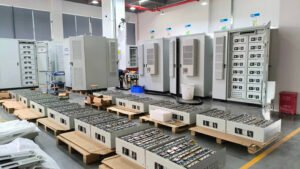
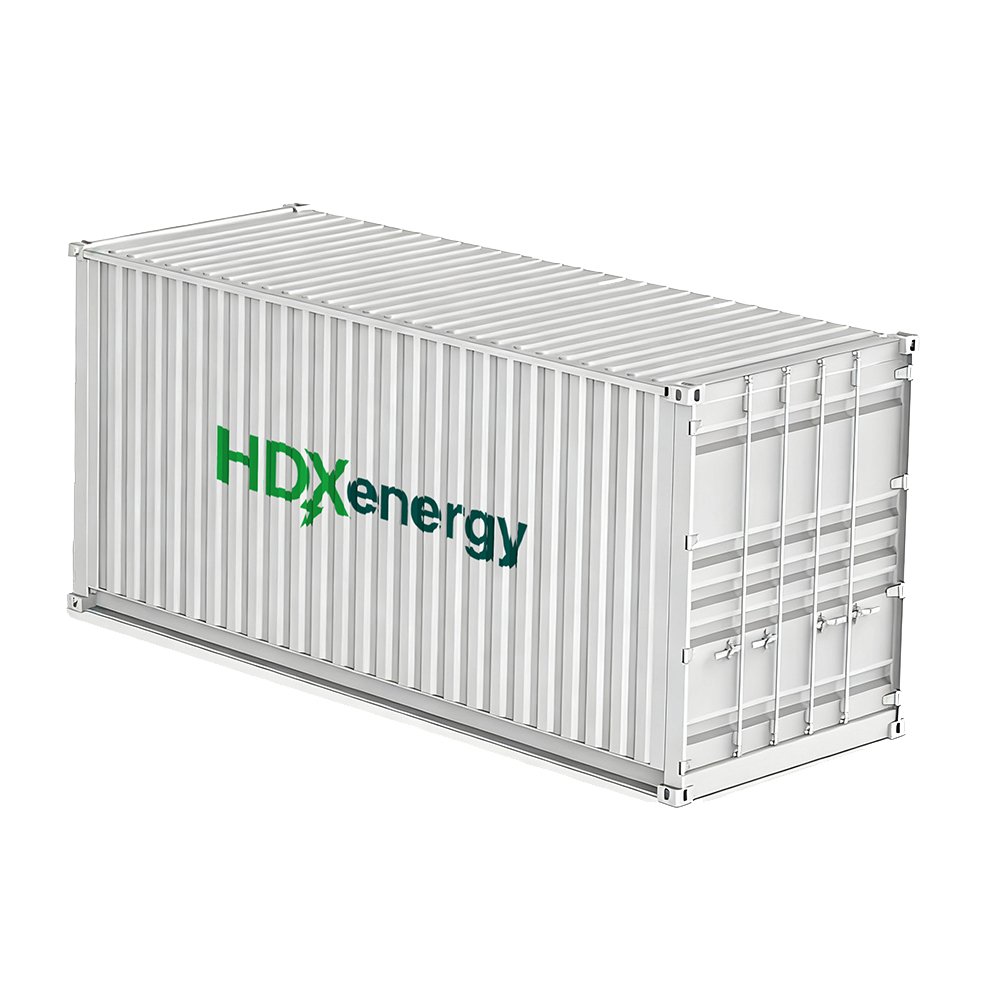
At its core, a 1MW 3MWh containerized BESS is a weatherized container that integrates lithium iron phosphate battery racks, a 1 MW power conversion system, protection and switchgear, liquid cooling or high‑performance HVAC, fire detection and suppression, gas sensing and ventilation, and SCADA or EMS controls. For industrial peak shaving, the typical duty is one to two discharge events per working day, each spanning one to three hours depending on your tariff’s billing demand window and your site’s peak profile.
- Power and energy envelope: 1 MW continuous discharge capability for roughly three hours of usable energy. Many teams target a conservative C‑rate around 0.3C to reduce heat stress and slow degradation.
- Usable versus nameplate: It’s common to oversize initial installed capacity so that after several years of fade the system still delivers approximately 3 MWh usable at the end of life threshold defined in the warranty.
- Efficiency and auxiliaries: Baseline round‑trip efficiency of about 85% is widely used in techno‑economic analyses, as reflected in the benchmark assumptions from the National Renewable Energy Laboratory’s Annual Technology Baseline. See the cost and performance framing in NREL’s commercial storage pages in the ATB 2024 resource.
Sizing methodology that preserves performance over life
The goal is simple to say and harder to execute — deliver 1 MW for three hours on the days you need it, not just in year one but through year ten, without breaking the warranty.
- Define your performance point. Identify the contracted or target maximum demand in kW and the billing window rules. Determine whether you need full 1 MW clipping or a partial shave. Translate that into a target discharge profile in 15‑minute or 5‑minute resolution.
- Convert usable to nominal. Starting from 3 MWh usable, add the cell‑to‑system overheads and your minimum state‑of‑charge reserve. Then apply an end‑of‑life capacity retention target per the warranty to solve for initial installed nameplate energy. Many projects land with 20–30 percent oversizing to keep 3 MWh usable at end of life under industrial duty.
- Set the PCS rating. A 1 MW PCS should be specified for continuous active power at the site’s power factor, with short‑duration overload capability consistent with the EMS strategy. Ensure grid codes and interlocks on the factory main are accommodated in the design.
- Model efficiency and auxiliaries. Use 85 percent round‑trip efficiency as a baseline and include HVAC and parasitic loads explicitly — they matter during summer peaks when cooling draw rises. NREL’s ATB practice supports these inputs; reference the ATB 2024 commercial storage page for definitions and context.
- Validate against cycle life. Keep your average depth of discharge and C‑rate within warranty bands. If your tariff and production schedule drive frequent deep discharges, explore a larger energy stack or adjust the dispatch to protect capacity retention.
Safety‑first customization with LFP and a clear compliance stack
For factory settings, LFP chemistry is often favored because of its thermal stability and established safety track record in stationary applications. Safety, however, is a system property — it’s achieved through the full compliance stack, container architecture, and documented testing.
- System listing and battery certification. Specify a system listed to UL 9540 with batteries qualified to UL 1973. UL 9540 covers system‑level construction and performance safety requirements, while UL 1973 addresses the battery modules and packs used in stationary systems. UL Solutions explains the relationships and scope on its ESS testing and certification overview.
- Thermal runaway fire propagation testing. Authorities Having Jurisdiction frequently rely on UL 9540A test reports to determine separation distances, ventilation, and mitigation. Large‑scale testing demonstrates whether a failure in one rack propagates and quantifies heat release and gas composition so mitigations can be sized. See UL’s large‑scale fire testing and UL 9540A explainer.
- Installation code. NFPA 855 provides installation requirements for stationary ESS, including documentation of large‑scale test results and pathways to adjust default spacing when justified by data. The standard’s landing page outlines the intent and scope on the NFPA 855 resource.
- Container architecture that matches the test unit. AHJs look for alignment between the UL 9540A tested configuration and the production container — compartmentalization, thermal barriers, suppression agent type and quantity, gas detection thresholds, deflagration venting area, and control logic should be consistent with what was proven in test.
Why all this rigor? Because incident analyses show many failures originate in balance‑of‑system or integration layers rather than the cell chemistry alone. The EPRI failure database synthesis highlights integration and construction quality as major contributors; see the EPRI incident insights brief for summary findings.
EMS and SCADA playbook for automated peak shaving
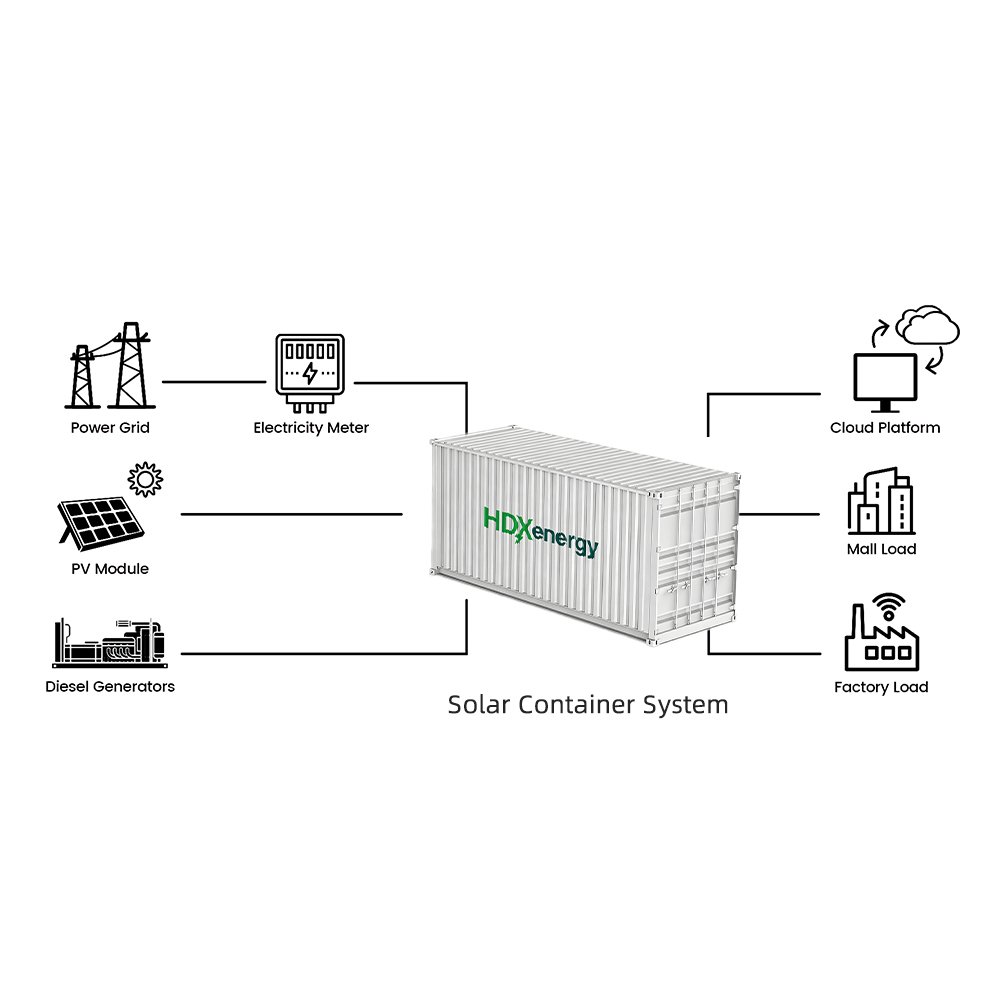
A good EMS turns an expensive battery into a dependable peak‑shaving machine. The spectrum runs from simple triggers to model predictive control.
- Threshold control. Measure real‑time demand at the main, forecast short‑term load, and trigger discharge when the predicted demand exceeds your target limit. Protect state‑of‑charge so you don’t deplete the battery before the window ends. This is fast to commission and works on flat or simple demand windows.
- Predictive control. For complex tariffs and variable production, use day‑ahead forecasts of load and on‑site solar to plan charge and discharge, then adjust intra‑day as measurements deviate. The controller should be tariff‑aware so it prioritizes the hours that set billed demand. DOE and NREL materials describe such dispatch for behind‑the‑meter storage; NREL’s SAM and related guidance discuss how demand charge savings are modeled, as summarized in the SAM demand charge guidance document.
- Warranty‑aware constraints. Bound C‑rate, temperature, and depth of discharge. Implement health‑based derates if a rack runs hot or if HVAC capacity is constrained on a very hot day.
- Integration protocols. Document support for Modbus TCP and OPC UA or IEC 61850 as appropriate, along with time sync and cybersecurity requirements. Ensure the EMS can expose KPIs to your plant SCADA so facilities sees what the battery is doing in context.
Two must‑have KPIs are peak‑limit compliance and avoided demand charges. A third is availability; many owners target 98 percent or better, tracked as a function of both hardware uptime and dispatch success.
Thermal and environmental design that protects lifetime
Thermal control is not an afterthought in a container — it’s a primary performance component. Think of the HVAC and liquid cooling loop as the system’s circulatory system. If it’s undersized, you’ll see heat‑induced derates and accelerated fade.
- Temperature band. Many industrial LFP systems operate best with cell temperatures maintained roughly in the mid‑teens to mid‑thirties Celsius, with charging curtailed near freezing and upper charge limits often capped around the mid‑forties Celsius per OEM limits. Keep to the specific operating ranges in your datasheets.
- Cooling strategy. High‑energy containers benefit from liquid‑cooled racks for tighter temperature uniformity. That reduces cell‑to‑cell gradients and preserves capacity and internal resistance over life. EPRI’s storage safety guidance underscores active thermal management as a reliability cornerstone; see the overview on the EPRI storage safety page.
- Environmental hardening. Specify insulation and preheaters for sub‑zero sites, positive‑pressure filtration for dust or salt‑mist, and ingress protection ratings matched to your environment. Validate condensation control and coolant‑leak detection during commissioning — several incident narratives trace back to water ingress and cooling issues, themes echoed in Sandia’s lessons learned deck.
Economics and payback modeling you can defend

There’s no single payback number for industrial peak shaving because tariffs and load profiles vary widely. The right way to quantify benefits is to combine interval load data, tariff specifics, EMS logic, and realistic performance assumptions.
- Cost and performance anchors. For input ranges, use the latest publicly available levelized cost and benchmarking materials. Lazard’s 2025 LCOE+ includes LCOS v10 with updated assumptions for lithium‑ion storage and is a common framing reference; see the Lazard 2025 LCOE+ report. Pair that with NREL ATB ranges for commercial storage from the ATB 2024 commercial storage page.
- Dispatch assumptions. Use 85 percent round‑trip efficiency at the system level, and include HVAC parasitics explicitly during peak months. Limit average depth of discharge to what your warranty supports.
- Tariff logic. Identify which intervals set billed demand and whether ratchets or seasonal rules apply. Align the EMS to prioritize those intervals even if it sacrifices less valuable hours.
- Modeled example. Imagine a factory with a summer demand charge of 18 dollars per kW and a typical unmanaged peak of 2.2 MW. A 1MW 3MWh containerized BESS that clips 800–1000 kW of that peak during the setting interval could reduce monthly billed demand by a similar amount when dispatch is consistent. Multiply avoided kW by the tariff rate to estimate gross savings, then deduct efficiency losses and any coincident energy charges from charging. Sensitivity test a case where only 600–700 kW is available on hot days due to temperature derates so your business case isn’t brittle.
Document the modeling method and assumptions so finance can audit them, and track realized savings against the model once in operation.
Practical example of a safety‑first configuration
Disclosure: HDX Energy is our product. In practice, here’s how a safety‑first 1MW 3MWh container could be configured using a containerized LFP stack, similar to what HDX Energy manufactures for industrial clients.
- Chemistry and racks. LFP racks with a hierarchical BMS at cell, module, rack, and system levels. System‑level protections include coordinated contactor tripping and isolation.
- Compliance package. Batteries qualified to UL 1973 and container listed to UL 9540, with large‑scale UL 9540A test data used to justify site separation distances and ventilation sizing under NFPA 855. Permit submittals include the UL 9540A executive summary and one‑line drawings.
- Suppression and detection. Water‑based or appropriate clean‑agent suppression sized to the UL 9540A heat release results. Multi‑point gas detection and deflagration venting area matched to the tested configuration.
- EMS and integration. Tariff‑aware peak‑limit control with Modbus TCP to plant metering and OPC UA into facility SCADA. Health‑aware dispatch keeps SoC and temperature within warranty bands.
- Thermal and environment. Liquid‑cooled racks, redundant HVAC units, preheat for cold starts, positive‑pressure filtration for dusty environments, and ingress ratings matched to site conditions.
To explore technical options and certifications from the manufacturer, see HDX Energy’s site at HDX Energy. The choice of features and evidence should always reflect your AHJ’s requirements and your tariff reality.
Procurement and bankability checklist
A repeatable procurement and commissioning process protects your economics and safety posture. Use this as a starting point.
- Vendor evaluation. Require UL 9540 listing details, UL 1973 battery certification, and UL 9540A large‑scale test reports for the exact or equivalent configuration. Ask for documented commissioning procedures and QA records.
- Warranty and SLAs. Capture capacity retention thresholds, throughput or cycle limits, round‑trip efficiency guarantees where offered, availability targets, and response times. Ensure the warranty is consistent with your EMS duty.
- Commissioning validation. Witness tests for EMS peak‑limit logic against the tariff window, protection interlocks, HVAC performance under load, gas detection calibration, and deflagration vent verification. Sandia’s and DOE’s lessons emphasize early detection and ventilation sizing; see Sandia’s thermal runaway physics overview for the engineering why.
- Operations and KPIs. Track availability, peak‑limit compliance, avoided demand charges, energy throughput, and temperature uniformity across racks. Investigate anomalies promptly so small issues don’t become big ones.
Your next steps
- Gather twelve months of 15‑minute load data and your full tariff sheets. Identify the months and intervals that set billed demand.
- Run a base model with 1MW 3MWh containerized BESS sizing and 85 percent round‑trip efficiency, including HVAC parasitics. Sensitivity test higher ambient temperatures and partial derates.
- Engage your AHJ early with a UL 9540 listing reference, UL 1973 battery evidence, and a UL 9540A executive summary, alongside an NFPA 855‑aligned site plan.
- Shortlist vendors who can show the exact compliance stack and provide commissioning and O&M documentation that align with your warranty and EMS strategy.
When done well, a 1MW 3MWh containerized BESS becomes an everyday tool on your plant floor — quietly capping peaks, protecting your bill, and staying inside the safety and warranty lines you set from day one.